In an ideal world, we would have endless dry, sunny afternoons to maintain our gardens. However, the unpredictable nature of the British weather often forces a choice: mow while it’s damp, or let the lawn grow wild.
Here at Gtech, we recommend waiting for the sun to come out. Mowing wet grass isn't just a mechanical challenge for your mower or a safety hazard for you. It's a biological risk to your lawn. From soil compaction that suffocates roots to the 'shredding' of grass blades that invites disease - the hidden costs of a wet mow often outweigh the rush for a 'quick tidy.'
In this guide, we dive into the 'grassology' of your garden. We explain why moisture changes the way grass behaves, why mowing a wet lawn can lead to disaster and how to protect your turf when the clouds won't clear.
What is grassology? You won’t find it in an academic dictionary, but at Gtech, grassology is our philosophy for a healthy home lawn. It’s the practical science of understanding how your mower, your soil and your grass work together – as a living ecosystem.
Should I mow a wet lawn?
The short answer from a health and safety perspective is no - we advise gardeners not to use our lawnmowers when wet. From a grassology perspective, the answer is also no. There's nothing to stop you, but you'll be fighting against the natural state of the plant and the soil.
To understand why, we have to look at what happens beneath the surface of your turf.
The science behind mowing wet grass
The danger of 'squelch': soil compaction
When your lawn is wet, the soil becomes soft and malleable. Think of it like a sponge: when it’s dry, it’s full of tiny pockets that help the roots breathe. The weight of a mower, particularly if it's a heavy petrol model, squeezes these tiny pockets out from the earth.
It compacts the 'pore space' that roots need to access oxygen. Without oxygen, the roots struggle to grow, drainage fails, and your lawn becomes a breeding ground for moss rather than healthy grass.
The 'shredding' effect: turgidity and tearing
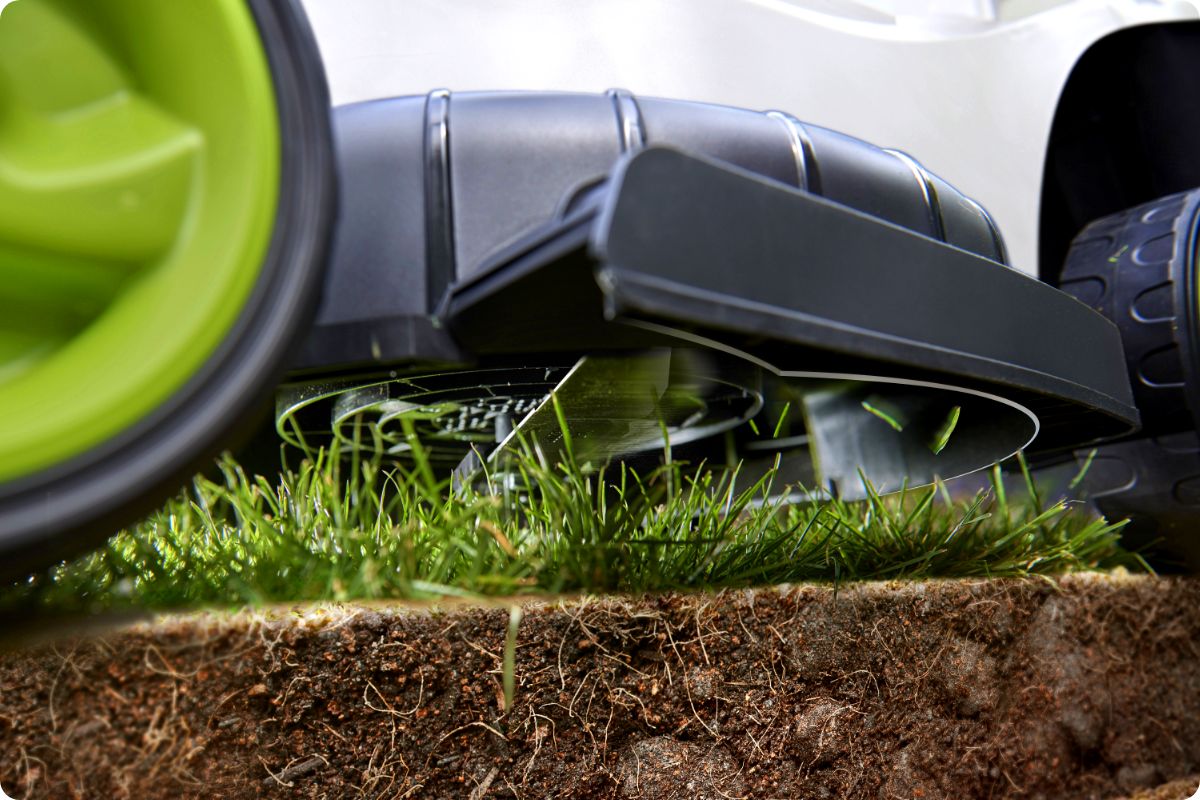
For a nice, clean cut, grass needs to stand upright. When it's wet, it becomes heavy and supple (a state called high turgidity). So, instead of being sliced cleanly by the lawnmower blade, the grass bends and gets 'shredded' or torn away.
Ragged edges: Torn grass blades have a larger area of damaged tissue than clean-cut ones. This damage takes longer to heal, which is why lawns cut in wet conditions often develop brown or white tips shortly after mowing.
Increased susceptibility to disease: Prolonged moisture on grass blades, combined with the additional stress caused by tearing rather than clean cutting, creates favourable conditions for common lawn fungal diseases to develop. This is why lawns cut in wet conditions are more likely to struggle in the days that follow.
But it isn't just your turf that suffers in the rain.
The mechanical impact: mowing vs. moisture
If you try to cut a sodden lawn, your mower will face a mechanical uphill battle. Even powerful cordless lawnmower technology has to work significantly harder when moisture is involved.
1. The 'Green Concrete' Effect : Freshly cut wet grass doesn't discharge like dry grass clippings. Instead of being neatly thrown into the bin, it sticks to the underside of the cutting deck. As these wet clippings build up, they form a thick, heavy layer - a 'green concrete'.
It reduces the airflow required for the mower to 'lift' the grass blades. Without that suction, you'll get an uneven cut and a mower that leaves messy clumps across your lawn.
2. Motor Strain and Battery Drain : Water makes grass significantly heavier and more resistant to being cut - as we covered in our section on 'shredding'.
Pushing through thick, sodden grass requires more torque. This increases the load on the motor. The extra power drawn by the motor to cut through this moisture can reduce your battery's run time or drain the petrol in your tank. It can considerably shorten mowing sessions.
3. You Risk Scalping the Turf : In wet conditions, the wheels of your mower won't just sit on the surface of the grass. They'll sink into the soft earth. And this lowers your entire deck height.
A 'safe' height of 30mm effectively drops as the wheels sink. This can lead to scalping - where the blade hits the crown of the grass plant, which can prevent recovery.
The impact on you: more than messy lawns
Beyond the health of the turf and the mechanics of your mower, mowing wet grass is a frustrating experience. Whether it's a necessary chore to keep the garden under control, or a hobby for a lawn-proud gardening enthusiast.
- Grass Stains: Wet grass contains chlorophyll-rich sap and a high level of moisture. When the grass is crushed underfoot or cut while wet, this sap is easily transferred, creating a potent ‘grass juice’ that acts like a dye. With very little effort, it can leave stubborn stains on shoes and clothing. And if you traipse it through the house… you’ve created another chore for yourself.
- Harder Work: Your mower has to work harder to cut the grass; you'll have to work harder to push it through, even if there is an inertial drive.
- Post-Mow Clean-Up: Instead of a five-minute job to empty the grass bin, you're left with a mower deck caked in clippings. Cleaning it is a messy and manual task. It usually requires lots of scraping to reduce the risk of odours or corrosion over time.
- Lawn Clumping: Even if you do successfully cut the grass while it's wet, you'll likely be left with heavy clumps across your lawn. If left, they can 'smother' healthy grass, blocking sunlight and trapping heat. This leaves yellow patches you'll find yourself repairing later.
Why your mower's weight matters
While we always recommend waiting for the grass blades to dry, the famous British weather often leaves us with another problem: the grass is dry, but the ground beneath is still soft and damp. This is where the engineering of your mower becomes a critical factor in your lawn’s grassology.
 "Our advice is to wait until the grass is dry before mowing - to protect your lawn's health. However, we also know that the ground rarely stays bone-dry in the UK. This is where engineering makes a difference.
On soft ground, heavier petrol-powered mowers can behave like a steamroller, placing more pressure on the soil. We designed our Gtech lawnmowers, the CLM50 and SLM50, to be lightweight. This reduces ground pressure and helps to minimise the risk of soil compaction.
It means that once the grass is dry enough to cut, you aren't punishing your soil's structure just to get the job done." – Nick Grey, Gtech Founder & Inventor]
How long should I wait? The grassology readiness test
After a rainy spell, there is no one-size-fits-all answer for how long to wait. On a warm, breezy day, your lawn might be ready in a few hours. In the depths of autumn, it could take days.
Not sure if it’s safe to mow your lawn after rain? Try these three simple checks:
- The Squelch Test: Step on the lawn. If you hear a squelch or see water rise, stay-off – the soil is still too saturated. If you do try mowing when it’s this wet, you’re going to risk compacting the soil.
- The Tissue Test: Press a dry tissue against the grass. If it’s soaked instantly, the moisture is high enough to cause clumping and the ‘green concrete’ effect in your mower.
- The Squeegee Hack: If the rain has stopped but your lawn is still covered in heavy morning dew, you can use a trick from professional UK greenkeepers. They use a technique called 'switching' to clear water.
You can replicate this by dragging a garden hose across the surface of the lawn. This acts as a giant ‘squeegee’, knocking the water droplets off the blades so they stand up and dry faster in the breeze.
Damage Limitation: 5 Tips For Mowing Wet Turf
We always recommend waiting for a dry spell. We also understand if you’ve got guests over for a summer barbecue, or a rare free afternoon on a weekend, you want to tidy your lawn. If the ‘Readiness Test’ says it’s safe to proceed, put these professional tips into practice to minimise the impact on your turf and mower.
- Check Your Equipment is Up to the Task: A damp mow is not the time for dull blades. To prevent ‘shredding,’ ensure your mower is clean and the blades are sharp. A powerful cordless motor - like the one in the Gtech CLM50 - is better equipped to handle the increased load required to cut heavier, moisture-rich grass.
- Raise Your Mower’s Cutting Height: This is the golden rule of wet mowing. Adjust your mower to its highest setting. Long grass cuts more cleanly when damp, and leaving more ‘leaf’ on the plant helps it recover faster from the stress of a wet cut. It also prevents the deck from getting clogged with ‘green concrete.’
- Go Slowly and Steadily: Instinct might tell you to rush to beat the next cloud, but don’t. Mowing at a slower pace allows the blades more time to process the heavier grass and maintain the airflow needed to lift the clippings into the bin. Smooth, steady lines prevent ‘dragging’ through the soft soil.
- Clean Up Clumps Immediately: If you see wet clumps sitting on the lawn, do not leave them. They’ll block the sunlight and trap heat, which can leave you with yellow patches. Take a break to rake them up or empty your collection bin twice as often as you would during a dry mow.
- The Post-Mow Deep Clean: Wet grass can cling to the underside of your mower’s deck. It clumps and traps moisture around metal parts – such as the blade or the deck. Over time, trapped moisture can increase the risk of corrosion or electrical issues on battery or electric lawnmowers.
When you’re done, remove the battery or unplug (if electric) or disconnect the spark plug wire (if petrol or diesel powered). Then scrape away any damp clippings from the deck and wheels. With this, you’ll ensure your mower has the airflow it needs for the perfect cut next time.
Looking for more advice? Head over to our guides on how to mow the lawn and when and how often to mow the lawn.