Sharpening Lawnmower Blades: Expert Tips for a Healthier Lawn
A beautiful lawn starts with a clean cut. Most homeowners focus on feed and water, but the edge of your blade is a critical factor in your lawn's health. At Gtech, we call this ‘grassology’ - understanding the science behind a perfect lawn and breaking it down into simple, actionable steps. A sharp blade is the difference between a lawn that thrives and one that merely survives.Cutting the lawn with a dull blade can cause all kinds of problems, from white tipping to increased susceptibility to disease.
We'll cover everything you need to know about lawnmower blade sharpening. From identifying when a blade is beyond repair, to the engineering behind Gtech's Omniblade technology, to how to safely sharpen your blade. This guidance reflects common UK mowing conditions and the engineering principles used across modern cordless lawnmowers.
Is it worth sharpening a lawnmower blade
Yes. A sharp blade slices through like scissors. A dull blade, however, acts like a blunt instrument, 'shredding' the grass. It's often overlooked - many home gardeners wait until the blade is beyond repair before replacing. However, as we've explored in our When and How Often Should I Mow the Lawn, and How to Mow the Lawn guides, 'shredding' or ‘tearing’ is terrible for your turf.
Most lawn damage attributed to ‘poor grass quality’ is actually cutting damage rather than soil or feed issues. From a grassology perspective, a clean cut is about recovery. An unclean cut creates a ragged, open wound that forces the plant to spend its energy on healing rather than growing. So, a sharp blade is the difference between a surgical snip and a torn graze.
How do you tell if a lawnmower blade is sharp?
- The Grass Tip Test: Look at your lawn a few hours after mowing. If the tips are white, frayed or jagged, your blade is dull.
- Visually Inspect the Blade: If you see nicks, dents or a rounded 'shiny' edge on the blade, it's time for a sharpen.
- The Paper Cut Test: A sharp blade should be able to slice through a piece of card or heavy paper with minimal effort.
How do you sharpen lawnmower blades?
Safety is always paramount. Before you begin, always remove the battery (if you're using a cordless mower), make sure it's not plugged (electric mowers) or disconnect the spark plug (petrol mowers) to prevent accidental starting.
1. Remove the Blade
Tilt your mower onto its side (ensure the air filter/carburettor is facing up on petrol models). Use a spanner to loosen the central bolt.
Pro Tip: Use a block of wood to wedge the blade against the mower deck to stop it from spinning as you loosen the bolt.
2. Cleaning the Edge
Scrape away any dried grass and debris. This isn't just for aesthetics - you're not just keeping up appearances. You cannot properly balance a dirty blade.
3. Sharpening the Edge
You can either use a metal file, a bench grinder or a drill-mounted sharpening stone to hone the edge. Follow the factory bevel - usually a 30-degree angle. Remember: only sharpen the top edge of the blade. Move from the inside of the blade toward the tip.
If you sharpen the bottom too, you'll create a double bevel. This pushes the cutting edge higher up, away from the grass. So, instead of a clean slice, the blade will likely push the grass down or shred it at an awkward angle.
Pro Tip: Don't over sharpen. You aren't looking for a razor edge. Instead, a 'butter knife' sharpness is more durable for the high-speed impact of mowing.
4. Balancing the Blade
This is a key step. An unbalanced blade will vibrate, eventually destroying your mower's motor bearings. Hang the blade by its centre hold on a nail in the wall. If one side dips, file a little more metal off that end until it stays level.
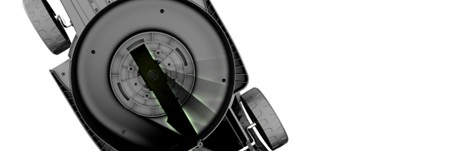
Redefining lawnmower blade technology: the Gtech Omniblade
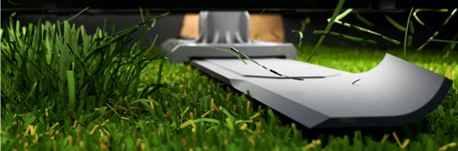
Traditional lawnmower blades can be tricky to maintain. They're easy to install upside down. And they can be difficult to balance. We wanted to simplify lawnmower maintenance. That's why we engineered the Omniblade – featured on our CLM50 and SLM50 models.
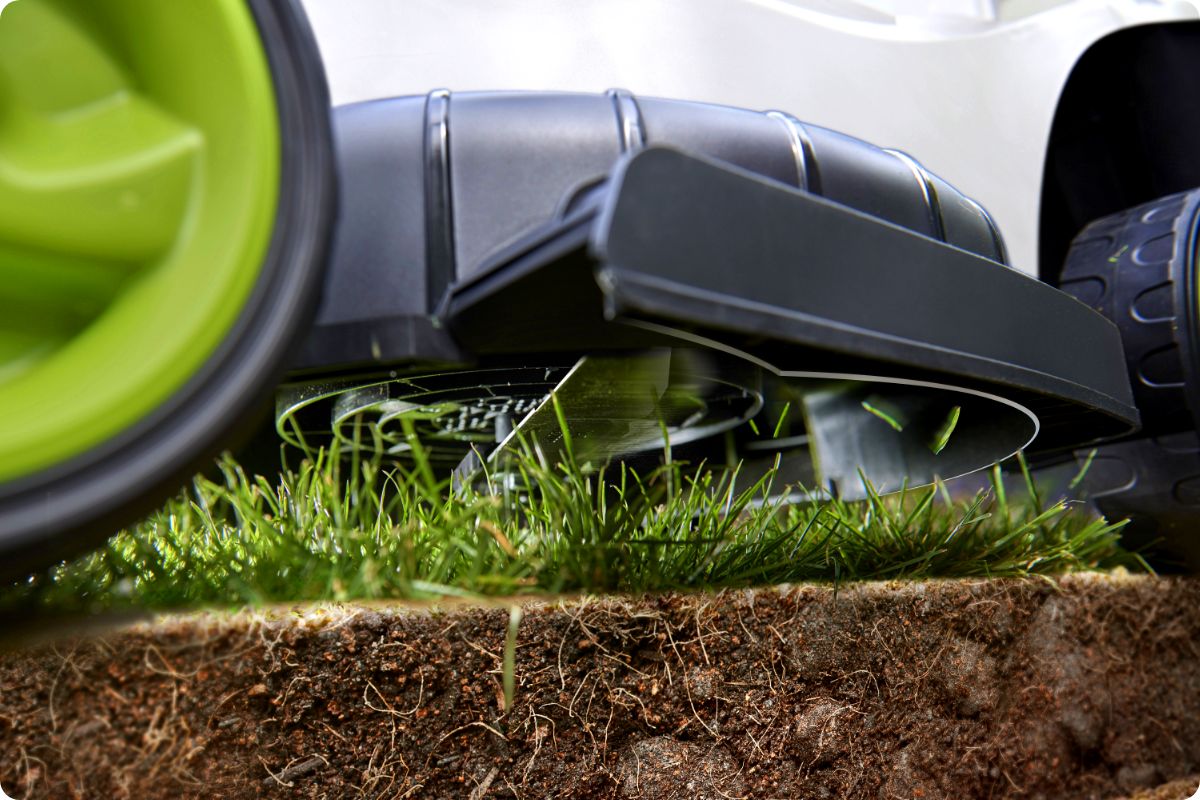
The Omniblade's unique, one-sided aerodynamic profile doesn't just improve the cut - it makes your life easier. Because the blade is asymmetrical, it's designed to be sharpened on one primary edge. Rather than a basic steel bar, it's a precision instrument, engineered to a higher standard than standard 'utility' blades. Its keyed mounting system ensures it slots back onto your mower perfectly, every time.
 "When we designed the Omniblade, we wanted to take the guesswork out of mower maintenance. Its specific shape means it only fits onto the motor hub one way - eliminating the risk of installing the blade upside down, which is a common mistake that can destroy a lawn's health. The blade is affordable while delivering consistent high performance." - Nick Grey, Gtech Founder & Inventor]
When paired with the intelligent cutting technology featured in our lawnmowers, the blade speed automatically increases from 2,800rpm to 3,500 in tough patches of grass. You get a mower that works harder, so you don't have to.
"That jump in speed is why a sharp edge is so vital. A dull blade at 3,500rpm creates immense drag, which drains your battery and puts unnecessary stress on the motor. Keeping that single leading edge sharp ensures you get the full benefit of that extra power, just when you need it most." - Nick Grey, Gtech Founder & Inventor.]
If your blade has significant cupping (thinning of the metal that occurs over time) or deep cracks (from hitting stones), sharpening becomes a safety risk. In these instances, it's time for a replacement.
Shop Gtech Replacement Omniblade Assembly
Is your lawnmower struggling even after sharpening the blade? It might be time for a fresh start. Explore the Gtech Cordless Lawnmowers range for a cleaner, easier cut.
>FAQs about lawnmower blade sharpening
How often should you sharpen lawnmower blades?
For the average UK garden, we recommend sharpening twice a season: once in the spring before the first cut and once in mid-summer. If your garden has rocky soil or many twigs or fallen branch pieces, you may need to do it more frequently.
Do you need to sharpen new lawnmower blades?
No, you do not need to sharpen most high-quality mower blades before using them for the first time. It's a common misconception that lawnmower blades should be razor sharp. New blades often feature protective coatings to prevent rust while in storage. You should wait until the blade has completed roughly 20-25 hours of mowing. For most UK homeowners with a medium-sized garden, this usually means a full season of use.
Can you sharpen lawnmower blades without removing them?
We don't recommend this. While there are 'on-mower' sharpening tools, they don't allow you to balance the blade properly or inspect it for dangerous cracks. For the sake of your mower's motor, take 10 minutes to remove the blade and do it properly.