Most buyers assume that self-propelled mowers are an upgrade on push mowers. After all, we live in a world that often prioritises ease over output, right? For decades, it was always argued that ‘more motor’ equals a better mowing experience. But as lawn mower technology has evolved, the old rules have changed too.
In this article, we’ll challenge that idea by pitting self-propelled mowers vs push mowers to help you decide whether that extra motor is a helping hand or just extra weight.
What Does Self-Propelled Mean on a Lawn Mower?
If you are looking for a self-propelled mower meaning, it essentially means the machine is doing all the heavy lifting. In other words, self-propelled lawn mowers have a built-in drive system that powers the wheels forward automatically, so you guide rather than push.
How does a self-propelled mower work?
Depending on the model, the power is sent to either the front or rear wheels. As the wheels turn, the mower pulls and creates forward motion. As a result, your job is to simply channel the energy and control the mower direction as it cruises across your garden.
On some models, you might even find variable speed settings, which allow users to mow at a pace that suits them. This feature is great for the slower gardeners among us, but weighs considerably more and comes at a high price.
What Is a Push Mower?
Unlike self-propelled models, push mowers rely entirely on the user to move it forward, with all of the energy committed to spinning the blades.
Are push mowers still difficult to move?
There is a common misconception about the difference between push and self-propelled lawn mowers. Many people still associate ‘pushing’ with the heavy, petrol-powered machines of the past, but modern cordless push mowers have been engineered to be lighter, simpler, and have fewer moving parts.
So, when it comes to most average-sized gardens, the effort difference is smaller than people expect.
Self-Propelled vs Push Mowers: Head-to-Head Comparison
When deciding between these two types of lawn mower, it helps to look past the model and focus on what you want for your garden. From weight levels to average prices, the table below breaks down all the differences between self-propelled and push mowers.
| Feature | Self-Propelled Mower | Push Mower (CLM50) | CLM50 Wins? |
|---|---|---|---|
| Physical Effort | Low | Low-Medium | |
| Weight | Heavier | Lighter | |
| Manoeuvrability | Moderate | Excellent | |
| Best for Slopes | Yes | Gentle gradients only | |
| Ideal Lawn Size | Large (300m² or more) | Up to 300m² | |
| Mechanical Complexity | Higher | Lower | |
| Price | Higher | Better value | |
| Storage | Bulkier | Compact |
Swipe to compare on mobile
Are Self-Propelled Mowers Worth It?
Despite all the features that modern models have to offer, no lawn mower is one-size-fits-all – which makes it difficult to answer this question. Generally, the answer is a resounding "yes" for those with sprawling lawns, steep slopes, or significant mobility issues. Self-propelling mowers are worth it for those with tricky lawns that are hard to maintain.
However, for the average British garden – of which many are small, flat, and easy to care for - the added weight and cost of buying a self-propelled mower isn’t justified.
Garden types
Before investing in a self-propelled mower, look at the obstacles - and more importantly, the shape - of your lawn. If you have an open garden with long, straight runs, a self-propelled mower is a fantastic tool.
However, lawn maintenance in smaller gardens (under 200m²) is trickier, as they often have tight corners and are filled with flower beds and furniture. In these busier spaces, the self-propel feature could make life more difficult because you end up doing more work to navigate around the various obstacles that a garden has to offer.
Physical ability vs mower weight
One of the biggest selling points for self-propulsion is that it’s ‘easier’ to use. This is true if you have a steep garden, and want to avoid putting strain on your arms, back, and shoulders. In these cases, the drive system is great at pulling the weight of the machine, so you don't have to.
That said, self-propelled mowers are significantly heavier than push models because of the added components. If you have to lift your motor into the shed or garage, it will quickly become a heavy burden, and you’ll be at risk of hurting yourself.
For many, having a mower that can be lifted and stored easily certainly makes the act of pushing it across the lawn worth it.
Long-term costs
When asking if self-propelled mowers are worth it, you need to look beyond the initial price tag. A self-propelled mower is a complex piece of engineering with drive belts that can slip, cables that can stretch, and transmissions that require servicing. Every part and every repair job will undoubtedly come at a cost.
On the other hand, the simplicity of a push mower is worth more in the long run. By choosing a push mower, you are investing in a machine with a simpler motor and fewer failure points. If you’re someone that enjoys frequent trimming sessions, then this reliability is invaluable, and will potentially save you more money in years to come.
Environmental impact
Choosing a mower without a drive system is also a great energy saver. In a self-propelled model, a significant portion of the battery’s charge is diverted away from the blades to move the mower across the lawn. By opting for a lightweight push mower, every watt of energy is dedicated to the rotation of the cutting blade, giving you more output from of a single charge.
Over a full season, this efficiency translates to lower electricity costs and a smaller carbon footprint, proving that a simpler machine could be the most sustainable and cost-effective choice.
When a Push Mower Is the Smarter Choice
If your goal is to spend less time working and more time enjoying your garden, push mowers are often the most logical tool for the job. With lightweight features, simpler storage, and sharper turning, push mowers are designed to make gardening that little bit easier.
Faster to manoeuvre
A lightweight cordless push mower is significantly easier to manoeuvre than its self-propelled cousin. In a standard British garden filled with birdbaths, patio edges, and flowerbeds, you need a piece of kit that can weave through tight gaps and reverse out of corners. With a push mower, you have much more manoeuvrability, allowing you to finish mowing in less time.
Easier to store
Garages and shed space are at a premium in the UK these days. Because they don’t have bulky transmission components and heavy drive shafts, push mowers are generally more compact, which makes them far easier to store.
What’s more, if you have to lift your motor to put it away, a self-propelled mower will feel considerably heavier once the power is off and it’s in the air. The weight difference between a push mower and a self-propelled mower will be felt in your back every time.
Simpler to maintain
Put bluntly, the ‘smarter choice’ is always the one that needs the fewest repairs.
A push mower is simpler to maintain because it has fewer moving parts. You never have to worry about lubricating the gearbox, and cleaning a push lawn mower is easier because the motor is less intricate. By choosing a push model, you are opting for a low-maintenance, highly reliable garden tool that focuses all of its energy on the quality of the cut.
Our Recommendation: The Gtech CLM50
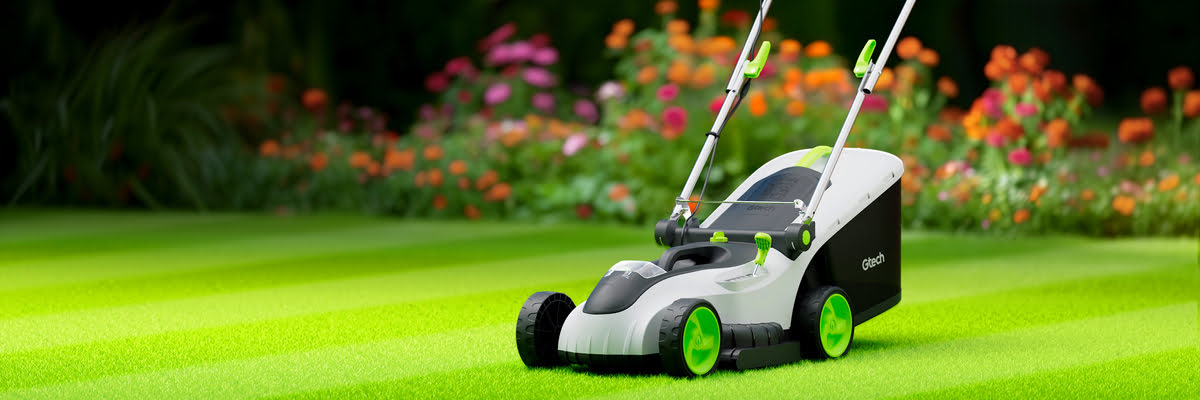
If you’re looking for a cordless push mower that’s been purpose-built to make life easier, Gtech’s CLM50 is a smart pick. It’s super lightweight, simple to use, and takes all the effort out of lawn maintenance. It’s a logical choice for gardeners that want a neat lawn without the hassle.
Frequently Asked Questions About Self-Propelled Lawn Mowers
Is a self-propelled lawn mower worth it for a small garden?
Not really. In a small garden (typically under 200m²), you spend a large amount of time turning, reversing, and navigating around obstacles like patios or fencing. Since a self-propelled system only assists with forward motion, you would be paying for a feature that you may rarely need.
If you’re looking for a motor that is faster and more agile on smaller plots, then it might be worth considering a push mower.
What are the disadvantages of a self-propelled mower?
Whilst they undoubtedly pack a lot of power, the disadvantages of a self-propelled mower include increased weight, higher purchase costs, and more complicated maintenance. This is due to the complexity of the motor, which requires gears, belts, and cables, and a transmission. Not only do these parts weigh much more than a push mower, but they also wear out over time, meaning they may require more frequent servicing.
Is a push mower harder to use than self-propelled?
Not necessarily. Modern cordless push mowers are engineered to be incredibly lightweight. So, while a self-propelled mower might handle forward momentum better, push mowers are easier to use in small spaces because they’re more agile when you want to change direction.
Can a push mower handle long grass?
Yes, absolutely. A mower’s ability to tackle long or thick grass depends on the power of the motor and the sharpness of the blade, not how fast it drives. In fact, using a push mower in long grass can be an advantage, as you can control the speed on thicker patches, carry out multiple passes, and improve the overall quality of the cut.