When to Trim Hedges: The Science of the Perfect Cut
In the UK, a well-manicured hedge is more than just a boundary; it’s a living feature of the garden to be proud of. However, many homeowners approach hedge trimming as a chore of convenience - doing it ‘when they have the time.’
In the UK, most hedges are best trimmed between late spring and late summer (May–August), with the exact timing depending on the species, weather conditions, and nesting birds.
The secret to getting that professional-grade finish doesn’t just lie in the tool you choose for the job or your skill. And it does require practice. It’s in the biological timing of the cut.
Having an understanding of the ‘why’ behind the ‘when’ you should trim your hedge will leave your garden looking its best, and ensure your hedges remain dense and healthy.
What happens when you cut a hedge?
It’s all about apical dominance. Most hedge plants produce a hormone called auxin in their leading vertical shoots. It suppresses the growth of side buds, encouraging the plant to grow tall.
When you trim the top of your hedge, you remove the source of auxin. This cuts off the growth suppression of those side buds, triggering the plant to redirect its energy to the lateral (or side) buds. The result is a thicker, bushier hedge that provides better privacy.
If you trim too early in the spring, you risk stimulating soft new growth that can be killed by a late UK frost – which isn’t uncommon. If you trim too late in the autumn, the plant wastes energy on shoots that won’t have time to ‘harden off’ before winter arrives.
The timing of trimming specific hedge species
Each plant species is different, with its own metabolism which impacts the way in which they grow. So, for example, trimming a beech hedge at the wrong time of year could cost you your winter privacy.
The ‘privacy’ pair: Beech & Hornbeam<
Best Time: Late August.
Beech and hornbeam are marcescent species, which means they can hold onto their dead copper-coloured leaves throughout the winter months. This provides you with year-round privacy that most other deciduous hedges can’t offer.
The secret to this ‘winter coat’ lies in when you trim them. Each leaf has a biological ‘release button’ at its base. Trimming in late August creates a minor stress that helps to encourage the plant to ‘lock’ its leaves onto the branches instead of letting them fall.
- Trim too early (July); The hedge will simply sprout a fresh flush of green leaves. These will follow a normal life cycle and fall in the autumn, leaving your garden exposed.
- Trim too late (October): The plant has already begun its internal shutdown for winter. So it’s too late to trigger that ‘lock’ response, and the leaves will blow away in the first winter gale.
The evergreen icons: Box (Buxus) & Yew
Best Time: May/June and again in September.
Box is susceptible to box blight – a fungal disease that causes leaves to turn brown, wither and fall. Trimming in late spring ensures maximum airflow during the dampest months. For Yew, August / September cut allows the ‘wounds’ to heal fully before the sap stops flowing for winter, preventing die-back.
The fast-growers: Privet & Laurel
Best Time: 2-3 times between May and September.
Privet and laurel are vigorous plant species. Frequent ‘finesse’ trims prevent the hedge from becoming woody. By keeping the energy at the surface, you ensure the hedge stays green from the ground up.
The ‘conifer caution’: Leylandii
Best Time: April, July, and August.
Leylandii is notorious for not regrowing from old wood. You must trim regularly but lightly. Never cut back into the brown, dormant interior, as it will remain a permanent ‘dead spot.’ Leave around 10cm (4 inches) of greenery on the hedge to be safe.
The wildlife wonders: Hawthorn
Best Time: After flowering (July).
Hawthorn sets its flower buds for the following year in late summer. Trimming in July ensures you’ve enjoyed the spring blossom without sacrificing next year’s display.
Legal considerations when hedge and bush trimming
In the UK, we must balance our gardening with the Wildlife and Countryside Act 1981. It is a criminal offence to intentionally damage or destroy a bird's nest while it is in use or being built.
The main nesting season for birds lasts from March to August. While there’s no ‘hard ban’ on trimming a domestic garden hedge during this time (unlike agricultural land), you are legally responsible for ensuring you do not disturb an active nest.
Pro Tip - The ‘soft’ check: Before using your cordless hedge trimmer, perform a ‘soft check.’ Gently rustle the hedge and watch for fleeing birds. If you find a nest, you must delay trimming that section until the chicks have fledged (left the nest for good).
For more details on your responsibilities as a homeowner, see our full guide on UK hedge trimming laws and regulations.
Choosing the right tool
No two hedges are the same – even when they’re of the same plant species. The conditions you’ll be starting with may vary quite significantly. The tools you choose to tackle the task of trimming should be carefully considered based on the plant’s growth habits.
What do we recommend
For High-Growing Hedgerows:
- Such as: Leylandii, Beech and Hornbeam
- Choose: Gtech HT50
- These species are the ones that grow tall (often over 10ft) and require top-down maintenance to stay healthy. With its 10ft reach and 135° pivoting head, the HT50 allows you to stand safely at ground level while angling the blades across the top of your hedge. No ladder needed.
For Finessing Hedgerows:
- Such as: Box (Buxus) and Privet
- Choose: Gtech LHT50
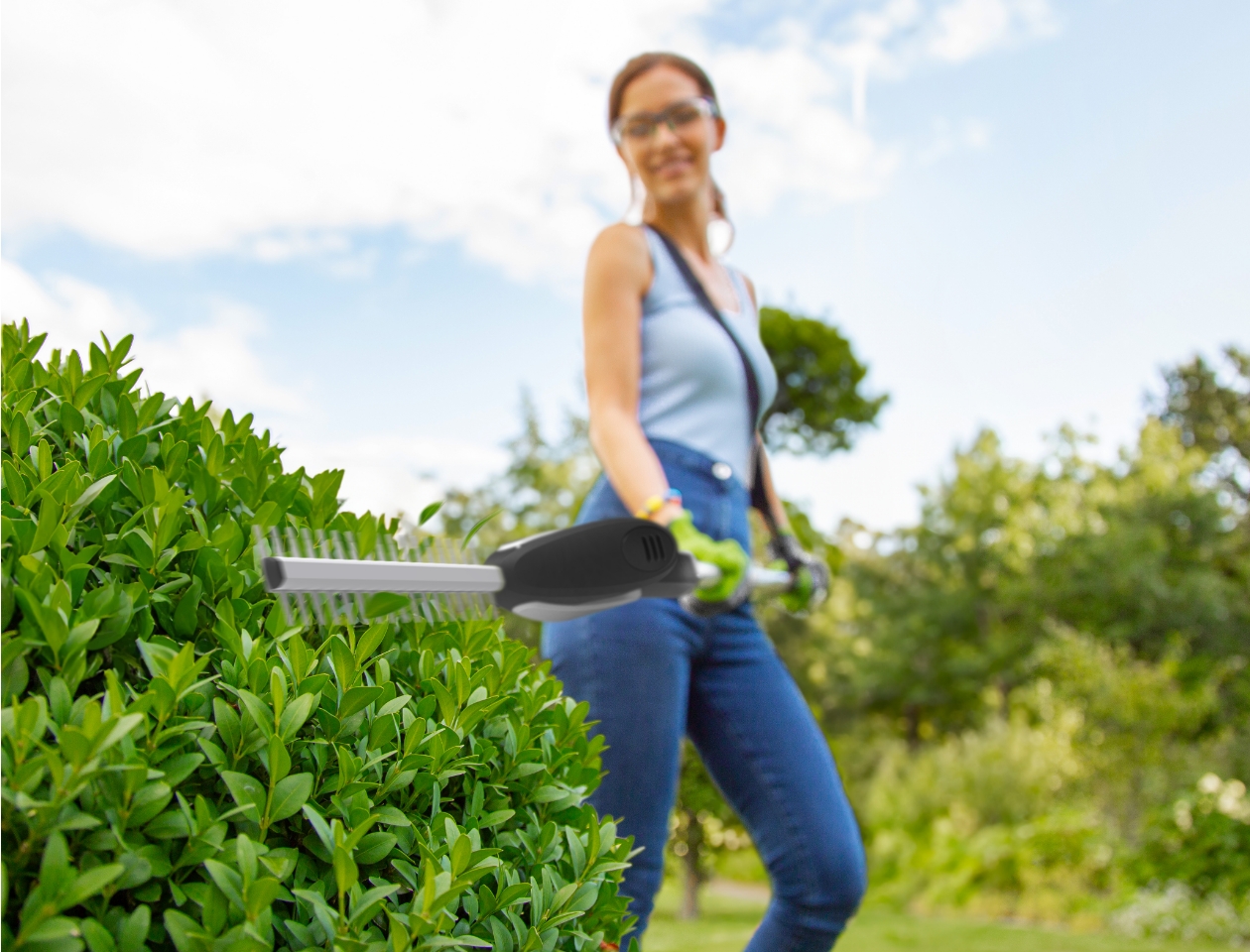
- They’re your formal hedges that require crisp lines, tight corners and regular trims to maintain their shape. The LHT50 is extremely lightweight, at just 2.1kg, making it ideal for manoeuvrability. You can sculpt intricately with surgical precision, or carry out a regular trim with the aches a heavier trimmer might cause.
When to put the hedge trimmer down<
Even if the calendar says ‘go,’ the UK weather might say ‘no.’
The heatwave rule: When the mercury rises and the temperatures exceed 28°C, stop. The inner leaves of a hedge are ‘shade-adapted.’ Trimming during a heatwave exposes them to direct UV rays they aren't prepared for, leading to ‘foliar scorch’ (ugly brown patches). Plus, it’s hard work too!
The frost rule: Never trim if a hard frost is forecast within 48 hours. The frost will enter the fresh ‘wound’ of the stem, causing it to shatter or die back several inches.
By aligning your garden maintenance with the natural rhythm of your plants, you do less work for a better result. You aren't just cutting branches; you are directing the plant's life force to create a denser, healthier, and more beautiful boundary.
Want to learn more? Head over to our guide on how to trim hedges and bushes