If you've never bought a drill before, the names don't make it easy.
Drill driver. Combi drill. Impact driver. Hammer drill.
They can sound like different versions of the same thing. They aren't. And if all you want to do is put up a shelf, hang a picture or assemble some furniture, it's easy to wonder which one you actually need.
For most everyday DIY, a combi drill is one of the most useful power tools you can have. It combines drilling, screwdriving and hammer drilling in one cordless tool, so you can tackle a surprisingly wide range of jobs without filling your shed with different machines.
Here's what a combi drill actually does, how the settings work and when it's the right tool for the job.
So, what is a combi drill?
A combi drill is a cordless drill with three functions:
. Drilling
. Screwdriving
. Hammer drilling
The first two are fairly self-explanatory. You can drill holes and drive screws.
The hammer setting is what gives a combi drill its extra versatility. It adds a small hammering action as the bit rotates, which helps when drilling into suitable masonry such as brick.
That doesn't mean a combi drill is the answer to every DIY job. For really heavy masonry work, you'd normally move up to a dedicated hammer or SDS drill.
But for the sort of jobs most people do at home, a combi drill can cover a lot of ground.
What can you use a combi drill for?
More than you might think. A combi drill can be used for jobs such as:
. Putting up shelves
. Hanging pictures and mirrors
. Assembling furniture
. Driving screws
. Drilling into wood
. Drilling into metal
. Drilling into suitable brick and masonry
. Fitting brackets and fixtures
. Building simple DIY projects
It's particularly handy when you're doing a job that involves both drilling and fixing.
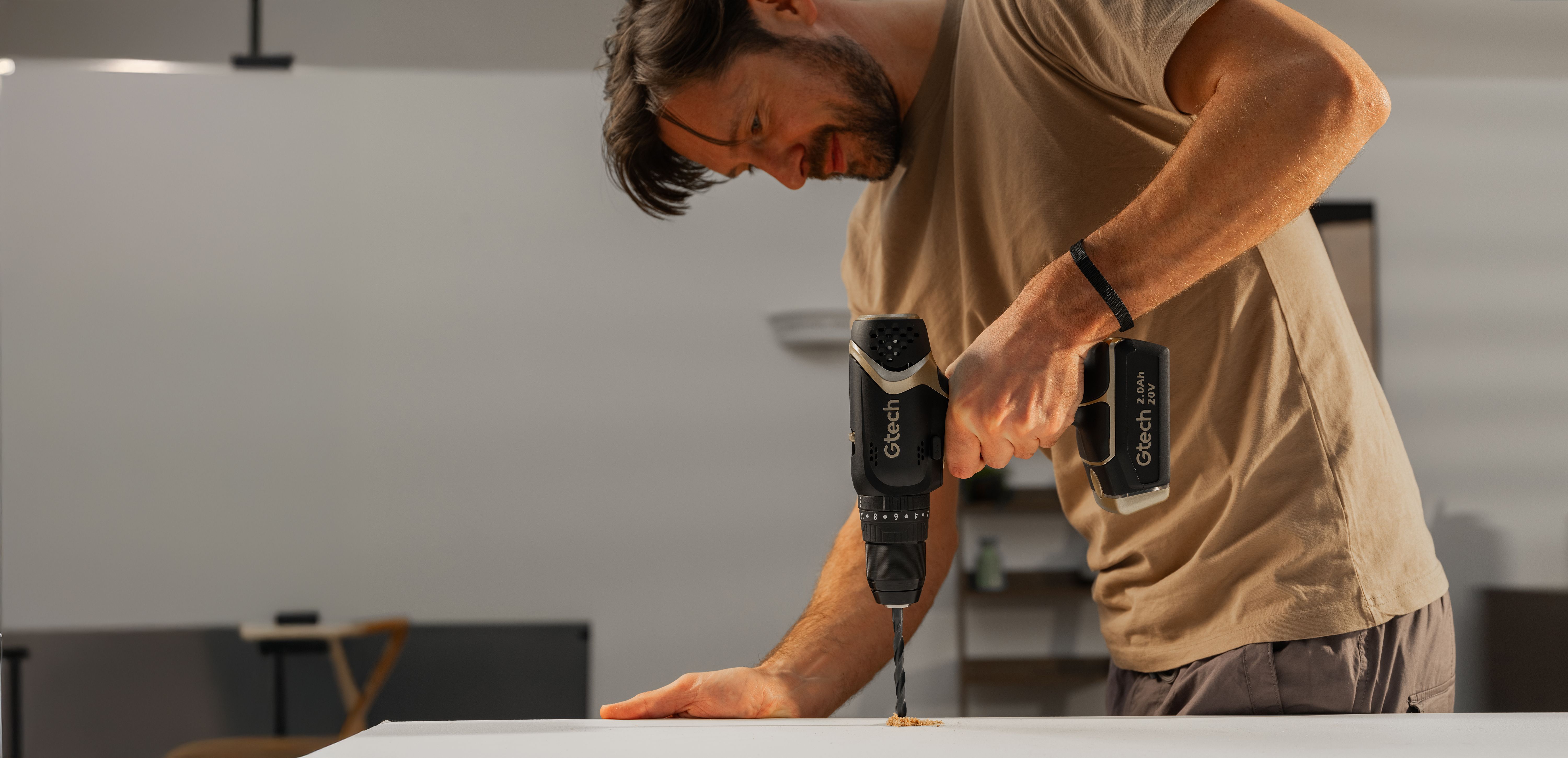
Take putting up a shelf. You might need to drill a hole, fit a wall plug and then drive a screw into it. One tool can do all three parts of the job.
That's really where a combi drill earns its place.
What do the different settings actually do?
This is where drills can look more complicated than they really are.
There are usually three things you'll adjust: mode, speed and torque.
Drilling mode
Use drilling mode when you want the bit to keep turning continuously.
The bit you use depends on the material. A wood bit for wood, a masonry bit for brick, and so on.
Screwdriving mode
This is the setting to use when you're driving screws.
You'll usually have a numbered collar behind the chuck. These are the torque settings.
The numbers aren't telling you how fast the drill goes. They're controlling how much turning force the drill applies before the clutch disengages.
That matters because you don't want to drive every screw in at maximum power. With a softer material, too much force can sink the screw too far or damage the material.
Start lower. Increase the setting if you need more force.
Hammer mode
Hammer mode adds a rapid hammering action to the rotation of the drill.
It's useful for suitable masonry, such as brick.
If you're drilling into particularly hard concrete or doing heavy-duty masonry work, though, a combi drill isn't necessarily the tool to reach for. That's where dedicated hammer or SDS drills come into their own.
What do the numbers on a combi drill mean?
If you've ever looked at the ring around the front of a drill and wondered what all those numbers are for, they're the torque settings.
Torque is simply the twisting force produced by the drill.
The higher the setting, the more force the drill will apply when you're screwdriving.
There's no prize for using the highest number.
For smaller screws or softer materials, a lower setting gives you more control. If the screw stops before it's fully driven, turn the setting up and try again.
It's one of those things that makes much more sense after you've used a drill a few times.
Gtech's Combi Drill has 21 torque settings, giving you plenty of scope to adjust the amount of force for different jobs. Gtech Combi Drill
What are the speed settings for?
Many combi drills have two speed ranges.
The lower speed gives you more control and is useful when you need more torque.
The higher speed is useful when you want to drill more quickly and the material and bit are suitable.
You can also control the speed with the trigger. Press it gently and the drill turns slowly; squeeze further and it speeds up.
Gtech's Combi Drill has two speed ranges of 0–450rpm and 0–1,700rpm, as well as a variable-speed trigger. Gtech Combi Drill
For someone new to DIY, that control is more useful than having a drill that simply goes as fast as possible.
What's the difference between a cordless drill and a combi drill?
This catches people out because cordless drill is a broad term.
It simply means the drill runs from a rechargeable battery rather than a power cable.
A combi drill is one particular type of cordless drill. It adds a hammer-drilling function to the usual drilling and screwdriving jobs.
So you can think of it like this:
Cordless drill = the wider category
Combi drill = a cordless drill with drilling, screwdriving and hammer-drilling functions
Not every cordless drill is a combi drill.
What's the difference between a combi drill and a drill driver?
A drill driver normally gives you two main functions:
Drilling + screwdriving
A combi drill adds:
Hammer drilling
If you're mostly assembling furniture, drilling wood and driving screws, a drill driver may be all you need.
If you want the option of drilling into suitable masonry as well, the combi drill gives you another useful function.
For a general-purpose home toolkit, that's why combi drills are so popular.
What's the difference between a combi drill and an impact driver?
This is worth understanding before you buy either.
A combi drill is designed to be an all-rounder. An impact driver is much more focused on driving fasteners with high torque.
| Feature | Combi Drill | Impact Driver |
|---|---|---|
| Drill holes | Yes | Not its main job |
| Drive screws | Yes | Yes |
| Hammer drilling | Yes | No |
| Adjustable torque | Yes | Different torque system |
| Best suited to | General DIY and drilling | High-torque fastening |
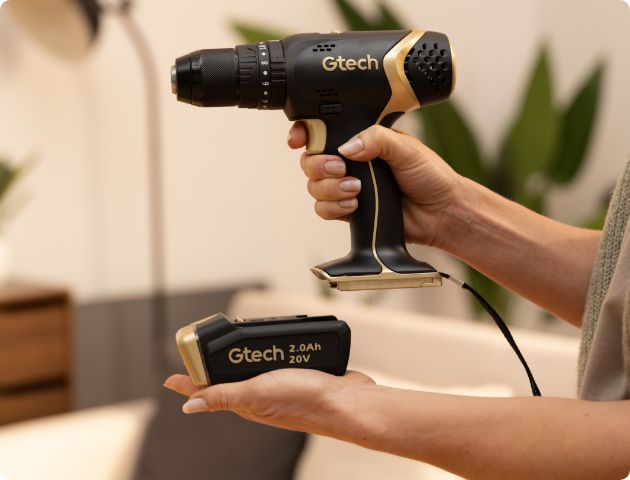
Imagine you're putting up a shelf. A combi drill is likely to be the more useful tool because you may need to drill holes and then drive screws.
If you're regularly driving large screws, bolts or other tough fasteners, an impact driver can make more sense.
You don't automatically need both.
Start with the jobs you actually do.
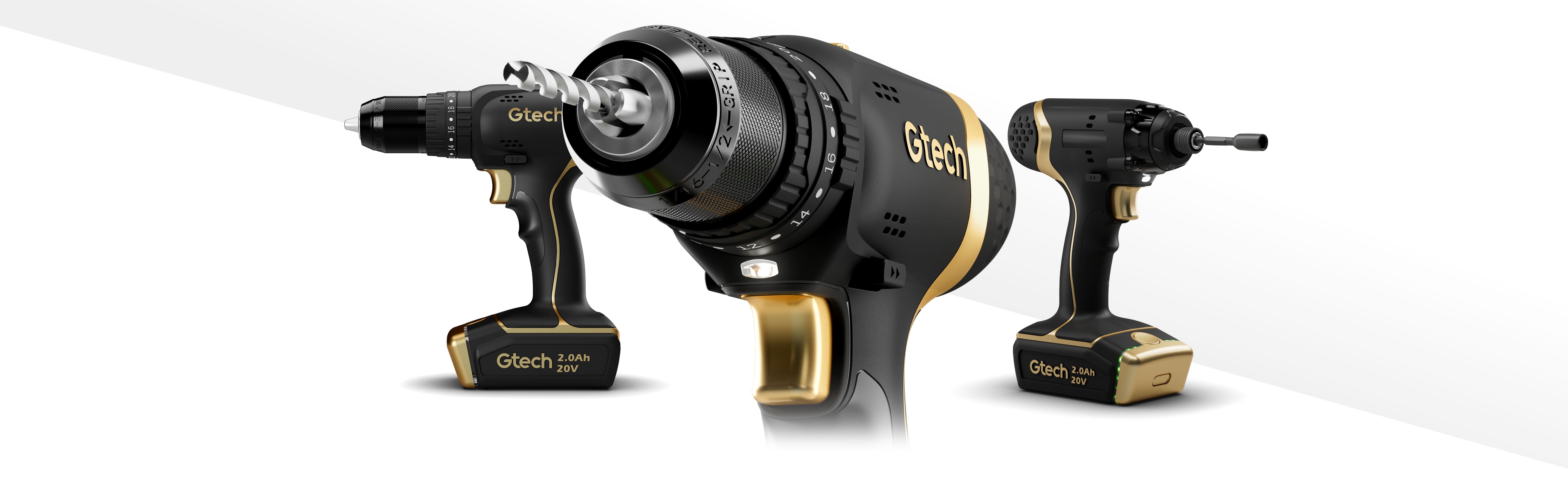
Gtech makes both types of tool. The current Combi Drill has 21 torque settings, while the Gtech Impact Driver is designed for higher-torque fastening and delivers up to 120Nm. Gtech Power Tools
Can you use a combi drill as a screwdriver?
Yes. That's one of its main jobs.
Put a suitable screwdriver bit in the chuck, select screwdriving mode and choose a sensible torque setting.
If you're working with a soft material, start with a lower setting. You can always increase it.
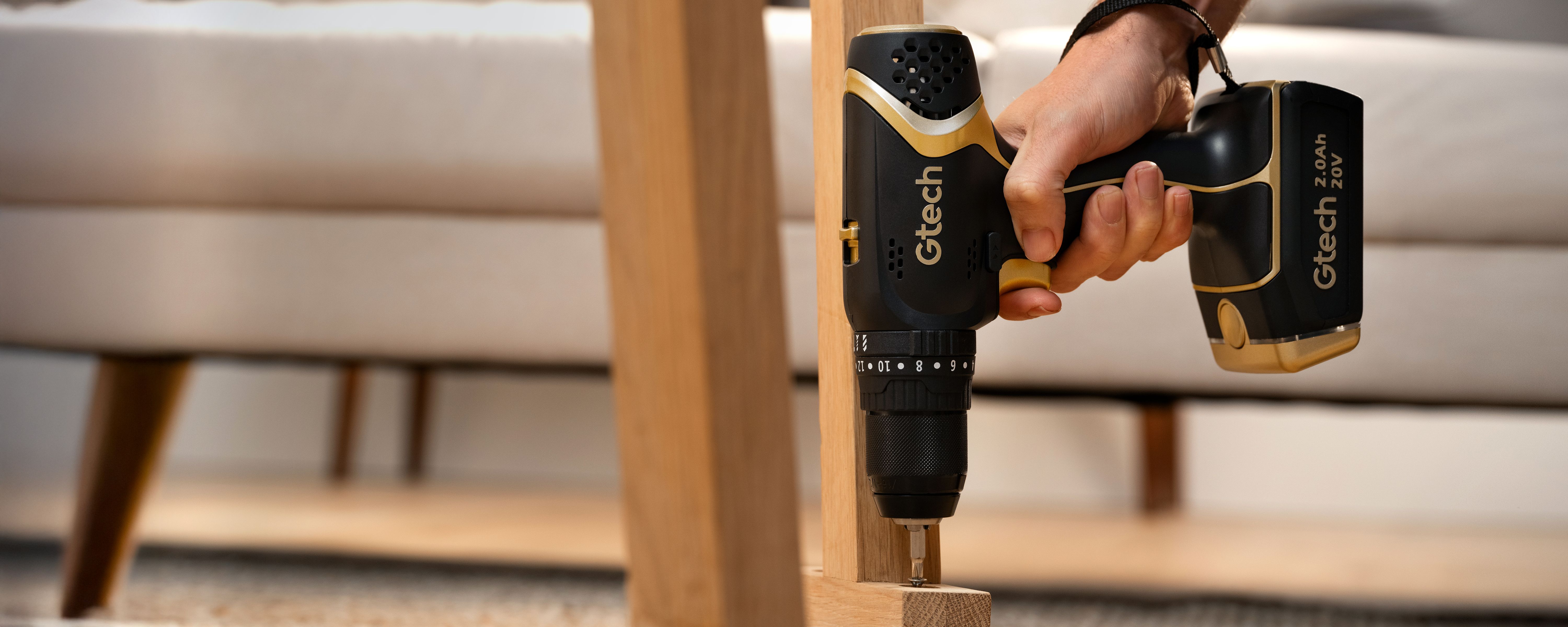
This is especially useful when you're assembling furniture. Instead of reaching for a manual screwdriver every time, you can let the drill do the repetitive work while keeping control over how far the screw goes.
Can a combi drill drill into brick?
Yes, provided the drill has a hammer function and is suitable for the job.
You'll also need the right masonry drill bit.
Before you start, check:
. The bit is designed for masonry
. Hammer mode is selected
. The speed is appropriate
. You know what fixing you're going to use
. You know what's behind the wall
That last one matters.
Before drilling into a wall, make sure you're not about to hit a cable or pipe. A suitable detector can help identify what's hidden behind the surface.
And remember that brick, block and concrete aren't all the same. If you're dealing with particularly hard masonry or large holes, a dedicated SDS or heavy-duty hammer drill may be the better choice.
Which drill bit should you use?
The drill is only half of the equation.
The bit matters just as much.
For wood
Use a drill bit designed for wood. These are shaped to cut cleanly through timber and wood-based materials.
For metal
HSS, or high-speed steel, bits are commonly used for drilling metal.
For brick and masonry
Use a masonry drill bit. If you're using the hammer function, make sure the bit is suitable for hammer drilling.
For screws
Use a screwdriver bit that matches the screw head.
And don't guess the size if you're drilling for a fixing.
If you're putting in a wall plug, for example, check the plug manufacturer's recommended hole size and use the appropriate drill bit.
Getting the bit right can make the difference between an easy job and one that feels like you're fighting the wall.
How do you choose a combi drill?
You don't necessarily need the most powerful drill you can find.
Start with the jobs you expect to do.
Think about the functions
If you want one tool that can drill, drive screws and handle suitable masonry, a combi drill gives you that flexibility.
Look at torque settings
Adjustable torque is useful when screwdriving because it gives you control over how much force you apply.
Check the speed settings
Two speed ranges can give you more control over different jobs.
Look at the chuck
A keyless chuck makes changing bits quick and straightforward.
Gtech's Combi Drill has a 2–13mm keyless chuck, so you can change suitable bits without needing a separate chuck key. Gtech Combi Drill
Consider the battery
Think about how long you expect to use the drill between charges and whether the battery can be used with other tools.
A shared battery system becomes more useful as your collection of cordless tools grows.
Don't forget weight and balance
This is easy to overlook when you're comparing specifications online.
A drill can have all the right numbers on the box and still feel awkward in your hand.
If you're holding it above your head to put up a shelf, or using it for a string of fixings, comfort matters.
Is a combi drill good for beginners?
For many people, yes.
In fact, if you're starting to build a DIY toolkit, the versatility is one of the reasons a combi drill makes sense.
You don't need to know everything about power tools before you start.
Learn the basics:
Choose the right bit.
Choose the right mode.
Start at a sensible speed.
Use the torque setting when you're driving screws.
Keep control of the drill.
And follow the manufacturer's instructions and safety guidance.
Start with something straightforward. Assemble some furniture. Drill into a piece of scrap wood. Put up a picture.
After a few jobs, the controls that looked confusing at first will start to feel obvious.
When is a combi drill not the right tool?
This is just as important as knowing what a tool can do.
A combi drill isn't a substitute for every other drill.
You may want something more specialised for:
. Heavy-duty concrete drilling
. Large holes
. Repeated heavy masonry work
. Jobs requiring SDS functionality
. Very high-torque fastening
For those jobs, a dedicated hammer drill, SDS drill or impact driver may be more suitable.
A good general-purpose tool doesn't have to do everything. It just needs to do the jobs you're likely to ask of it well.
Why choose a Gtech Combi Drill?
We designed the Gtech Combi Drill for the sort of jobs people actually tackle at home.
It combines drilling, screwdriving and hammer modes in one cordless tool, with 21 torque settings and two speed ranges. Gtech Combi Drill
It uses Gtech's 20V rechargeable lithium-ion battery system, which is shared across compatible Gtech Power Tools.
Gtech quotes up to 40 minutes of runtime, although how long a battery lasts will depend on what you're doing with the drill.
The chuck takes suitable bits from 2–13mm, and the current model is rated to drill up to 30mm in wood and 10mm in steel. Gtech Combi Drill
There's also an LED light to illuminate the work area and a variable-speed trigger to help you control the drill as you work.
None of those numbers tells you whether it's the right drill for you on its own.
The useful question is simpler:
Will it handle the jobs I want to do?
For everyday DIY around the home, that's what the Combi Drill is designed for.
Start with the job, not the drill
This is probably the best piece of advice we can give.
Don't buy a drill because it has the biggest number on the specification sheet.
Think about what you actually want to do.
Want to hang a picture? Start by finding out what the wall is made from and what fixing you'll use.
Putting up shelves? Work out where they need to go, what they're being fixed into and what size hole you need.
Assembling furniture? You'll probably spend more time driving screws than drilling holes, so control matters.
Building something in the garden? Work out the materials and fixings before choosing your bits and settings.
Once you know the job, choosing the right tool becomes much easier.
Frequently asked questions
What is a combi drill?
A combi drill is a cordless drill that combines drilling, screwdriving and hammer-drilling functions in one tool.
What is a combi drill used for?
It's used for everyday DIY jobs such as drilling holes, driving screws, assembling furniture, putting up shelves and drilling suitable masonry.
Can a combi drill be used as a screwdriver?
Yes. Fit a suitable screwdriver bit, select screwdriving mode and choose an appropriate torque setting.
Can a combi drill drill into brick?
Yes, if the drill has a suitable hammer function and is capable of the job. You'll also need an appropriate masonry drill bit.
Is a combi drill the same as a hammer drill?
Not quite. A combi drill combines drilling, screwdriving and hammer drilling. Hammer drill describes the hammering function rather than necessarily the whole tool.
What's the difference between a combi drill and an impact driver?
A combi drill is a versatile tool for drilling, screwdriving and hammer drilling. An impact driver is primarily designed to drive fasteners using high torque.
What drill bits can you use with a combi drill?
That depends on the material. Common options include wood bits, HSS bits, masonry bits and screwdriver bits.
What do the numbers on a combi drill mean?
The numbered settings normally control the torque used during screwdriving.
Is a combi drill good for beginners?
For many DIY beginners, yes. Its combination of functions means one tool can handle a wide range of everyday jobs.
Do I need a combi drill for DIY?
Not necessarily. It depends on what you're planning to do. But if you want one cordless tool that can drill, drive screws and handle suitable masonry, a combi drill is a versatile choice.
Ready for your next DIY job?
Once you understand what the settings do, a combi drill is much less intimidating than it first looks.
Drilling. Screwdriving. Hammer drilling.
Three useful functions in one cordless tool.
[Explore the Gtech Power Tools Range]