If you're deciding between a combi drill and an impact driver, the easiest way to choose is to forget the specifications for a moment and think about the job you're trying to do.
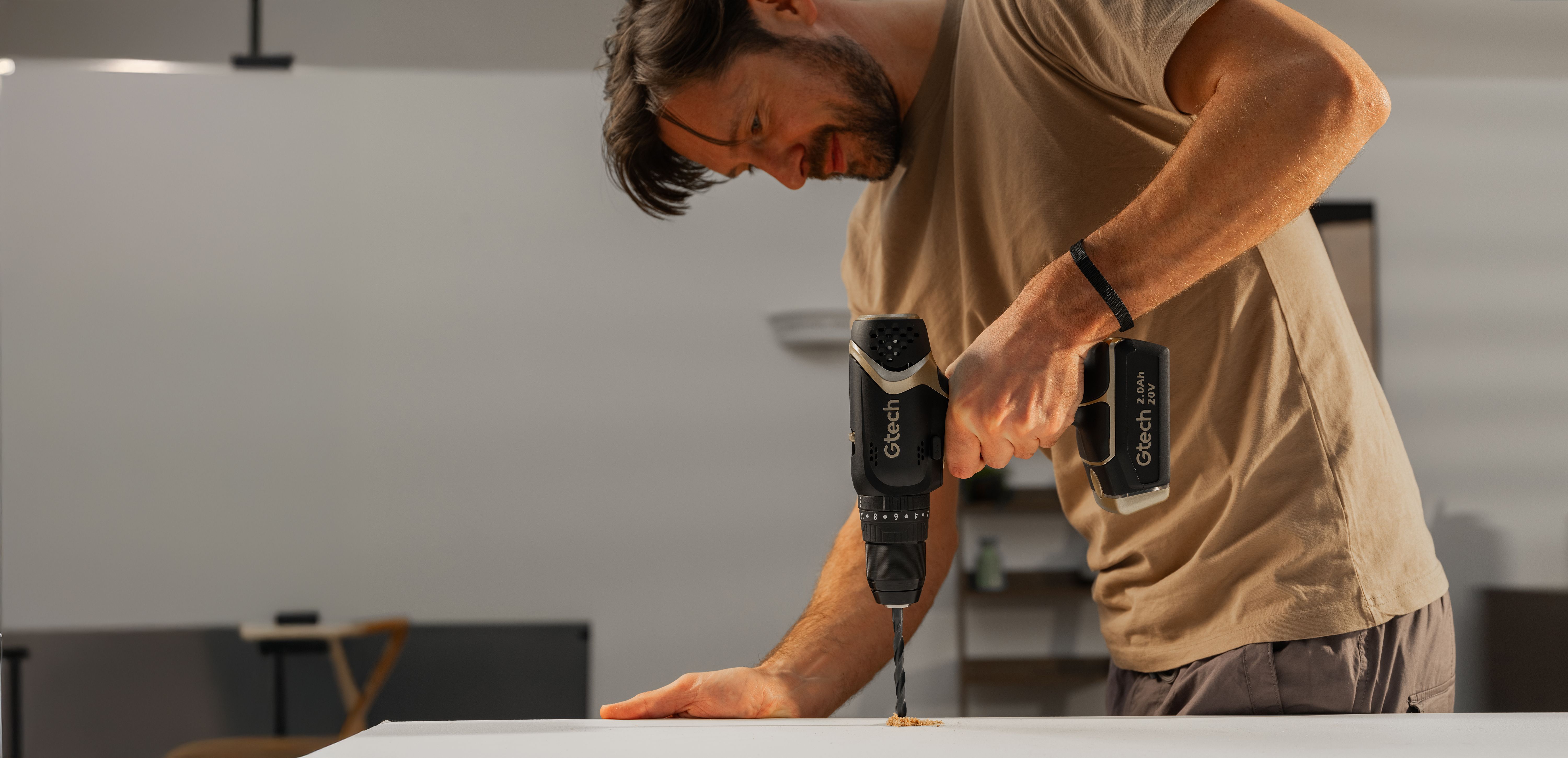
A combi drill is the more versatile tool. It can drill holes, drive screws and, with its hammer function, drill into suitable masonry.
An impact driver is more specialised. It's built to drive screws and other fasteners with high torque, making it particularly useful for long screws, larger fixings and repetitive fastening.
So, if you're buying your first cordless power tool for general DIY, a combi drill is usually the better starting point.
If you've already got a drill and regularly find yourself driving long screws into timber, an impact driver could be the more useful addition.
Neither is simply "better". They're designed to solve different problems.
Combi drill vs impact driver at a glance
| Feature | Combi drill | Impact driver |
|---|---|---|
| Drilling holes | Yes | Not its main purpose |
| Driving screws | Yes | Yes |
| Hammer drilling | Yes | No |
| Controlled screwdriving | Excellent | Less suited to delicate work |
| High-torque fastening | Good | Excellent |
| Best for | General DIY | Tougher, repetitive fastening |
What's the difference between a combi drill and an impact driver?
The simplest way to put it is:
A combi drill is an all-rounder. An impact driver is a fastening specialist.
A combi drill combines three useful functions:
Drilling
Screwdriving
Hammer drilling
That makes it useful for everything from assembling furniture and putting up shelves to drilling into wood, metal and suitable masonry.
An impact driver concentrates on one particular job: driving fasteners with a lot of torque.
Its internal impact mechanism delivers rapid bursts of rotational force when the fastener becomes difficult to turn. That's why an impact driver can make light work of long screws and larger fixings that would put considerably more strain on a conventional drill.
If you want to understand the two tools in more detail, our guides to [what a combi drill is] and [what an impact driver is] go into the mechanics and settings separately.
Which is better for general DIY?
For most people, a combi drill.
That's not because it's more powerful. It's because it can do more things.
Think about the jobs that tend to come up around the house:
You might need to drill a hole for a wall plug, drive a screw into it, assemble a piece of furniture or put up a shelf.
A combi drill can handle all of those jobs.
An impact driver is excellent at driving fasteners, but you wouldn't normally choose it as your only cordless tool if you also need to do a lot of drilling.
If you're buying your first power tool
I'd start with a combi drill.
If you've already got a combi drill
That's when an impact driver becomes interesting.
If you're starting to take on bigger timber projects or regularly driving long screws, the impact driver gives you something your combi drill doesn't specialise in: high-torque fastening.
Which is better for driving screws?
It depends on the screw.
For ordinary DIY screwdriving, a combi drill gives you excellent control. Its adjustable torque clutch lets you choose how much force is applied before the clutch disengages.
That's particularly useful when working with smaller screws or softer materials.
An impact driver takes a different approach.
When the resistance increases, its impact mechanism delivers additional rotational force. This makes it particularly useful for:
. Long screws
. Large screws
. Structural fixings
. Dense timber
. Repetitive fastening
So if you're putting a few screws into a bookshelf, reach for the combi drill.
If you're driving dozens of long screws into timber, an impact driver starts to make a lot more sense.
Which is better for drilling?
A combi drill.
It's what the tool is designed to do.
A combi drill has a conventional chuck that accepts a wide range of suitable drill bits. Depending on the model and bit, you can drill into materials such as wood, metal and masonry.
An impact driver isn't primarily a drilling tool.
Some impact drivers can be used with suitable drill bits or adaptors, but that doesn't turn them into a replacement for a drill.
If drilling is an important part of your DIY, a combi drill is the straightforward choice.
Which is better for drilling into brick?
Again, a combi drill.
A combi drill's hammer function adds a rapid hammering action to the rotation of the bit, making it suitable for drilling into appropriate masonry when used with the correct masonry bit.
An impact driver doesn't have that hammer-drilling function.
For ordinary DIY jobs involving suitable brick or masonry, a combi drill is therefore much more useful.
For particularly hard concrete or demanding masonry work, you'd normally step up to a dedicated hammer or SDS drill.
Which is better for assembling furniture?
Usually a combi drill.
Furniture assembly is a good example of why more torque isn't automatically better.
You often want control rather than brute force.
A combi drill's adjustable clutch allows you to set the amount of torque you're applying. That can help prevent you from driving a screw too far into a softer material or damaging the fixing.
An impact driver can certainly drive screws, but its high torque is more than you need for many furniture jobs.
Sometimes the more appropriate tool is simply the one that's easier to control.
Which is better for building decking?
An impact driver.
Decking involves a lot of fastening, often with relatively long screws driven into timber.
That's exactly the sort of job an impact driver is designed to handle.
The impact mechanism provides additional rotational force as resistance increases, helping you drive fasteners without asking a conventional drill to do all the heavy lifting.
And when you're driving the same type of screw again and again, the time and effort saved can add up quickly.
Which is better for woodwork?
This one depends on what you're doing.
For drilling holes in wood, a combi drill is the obvious choice.
For driving lots of screws into timber, an impact driver can be the better tool.
For a project such as building a workbench, for example, you might actually use both:
Combi drill: drill pilot holes and make larger holes.
Impact driver: drive the longer construction screws.
That's one of the reasons the two tools complement each other so well.
What about a drill driver?
There's another tool that sometimes gets lost in this conversation: the drill driver.
A drill driver is generally designed for two jobs:
Drilling + screwdriving
A combi drill adds:
Hammer drilling
An impact driver is different again:
High-torque fastening
So if you search for:
"impact driver vs drill driver vs combi drill"
the distinction is really about how much versatility versus fastening power you need.
Drill driver vs combi drill vs impact driver
| Feature | Drill driver | Combi drill | Impact driver |
|---|---|---|---|
| Drilling | Yes | Yes | Not its main purpose |
| Screwdriving | Yes | Yes | Yes |
| Hammer drilling | No | Yes | No |
| Controlled screwdriving | Excellent | Excellent | Less suited to delicate work |
| High-torque fastening | Good | Good | Excellent |
| Best for | Drilling and screws | General DIY | Tougher, repetitive fastening |
For most general DIY, the combi drill sits nicely in the middle: versatile enough for a wide range of jobs without being overly specialised.
Can you use an impact driver as a drill?
Sometimes, but I wouldn't buy one expecting it to replace your drill.
There are drill bits and adaptors designed for use with impact drivers, but the tool isn't designed primarily around general drilling.
A combi drill gives you a conventional chuck, better control for drilling and, where appropriate, hammer action.
So if you need to drill regularly, buy a drill.
If your main job is driving difficult fasteners, buy an impact driver.
It sounds obvious, but it's an easy distinction to lose when you're comparing specifications online.
Which tool is better for a beginner?
For most beginners, a combi drill.
It's the tool I'd recommend if you're building your first cordless DIY kit.
You can use it for:
. Putting up shelves
. Hanging pictures
. Assembling furniture
. Drilling wood
. Drilling metal
. Drilling suitable masonry
. Driving screws
. General home maintenance
An impact driver becomes more useful once you know you have a need for one.
If you've never used either tool before, there's little benefit in buying the more specialised option simply because it has a higher torque figure.
Start with the tool that gives you the widest range of useful jobs.
Do you need both?
Eventually, possibly.
But you don't need to buy both just because they look like they belong together.
If you're starting from scratch, I'd buy the combi drill first.
Then, if you're regularly doing jobs involving long screws, larger fixings or repetitive fastening, add an impact driver.
The two tools can then work alongside each other.
Combi drill: drilling and controlled screwdriving.
Impact driver: high-torque fastening.
You use the right tool for the job instead of asking one tool to do everything.
Which should you choose?
Here's the simplest way to decide.
Choose a combi drill if:
. You want your first cordless power tool.
. You need to drill holes.
. You want controlled screwdriving.
. You work with different materials.
. You want one tool for a broad range of DIY.
. You need to drill suitable masonry.
Choose an impact driver if:
. You already own a drill.
. You regularly drive long screws.
. You're working with larger fixings.
. You're building decking or timber structures.
. You do a lot of repetitive fastening.
. Your existing drill struggles with tougher screws.
Choose both if:
You do enough DIY to benefit from having each tool available for the job it's designed to do.
Which Gtech tool is right for you?
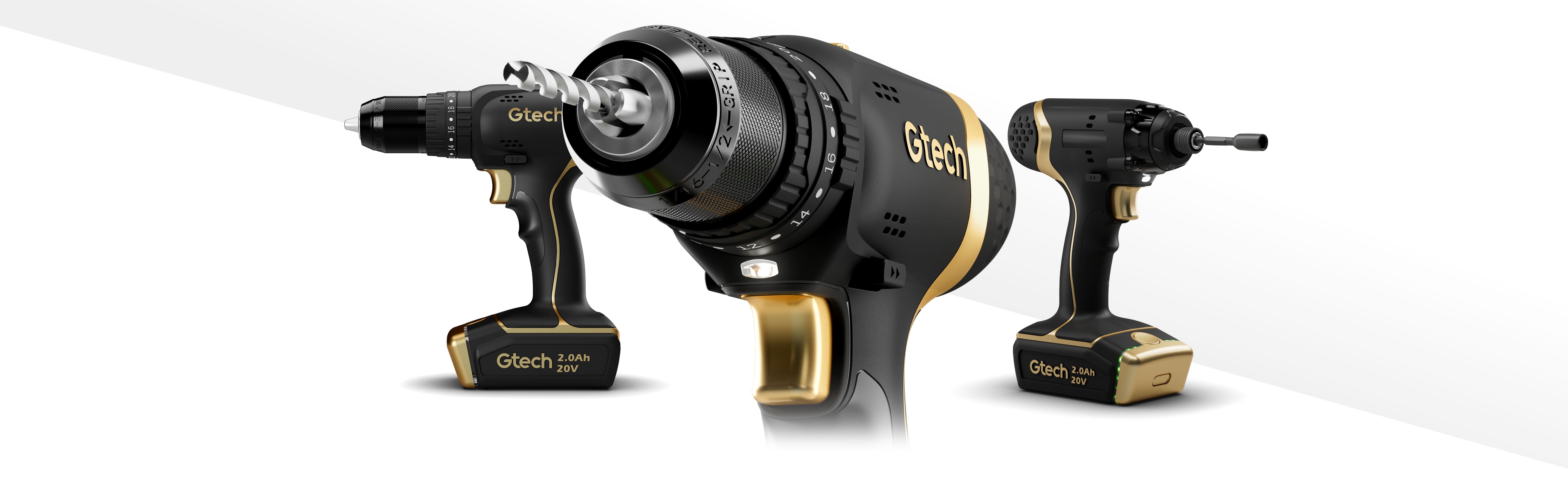
Gtech makes both a Combi Drill and an Impact Driver, so the choice comes down to what you want to do rather than which product we can sell you.
The Gtech Combi Drill combines drilling, screwdriving and hammer drilling, with 21 torque settings and two speed ranges. It's designed as the versatile option for everyday DIY.
The Gtech Impact Driver is built around high-torque fastening and delivers up to 120Nm of torque. It's better suited to tougher fastening jobs where long screws, larger fixings or repetitive work are involved.
Both use Gtech's 20V battery system, allowing the battery to be shared across compatible Gtech Power Tools.
So, if you're starting your cordless toolkit, we'd point you towards the Combi Drill.
If you've already got one and want something specifically for tougher fastening, the Impact Driver is the natural next step.
A useful rule of thumb
If you're still unsure, ask yourself one question:
What am I going to do most often?
If the answer is drill holes, put up shelves, assemble furniture and do general DIY, choose a combi drill.
If it's drive long screws, build timber projects and tackle lots of larger fixings, choose an impact driver.
That's a much better way to choose than simply comparing torque figures.
The best power tool isn't necessarily the most powerful one. It's the one that suits the job.
Frequently asked questions
Is an impact driver better than a combi drill?
Neither is universally better. A combi drill is more versatile and better suited to general DIY, while an impact driver is better for high-torque fastening.
Can a combi drill replace an impact driver?
For many everyday DIY jobs, yes. But if you're regularly driving long screws or larger fasteners, an impact driver can provide more torque and make those jobs easier.
Can an impact driver replace a combi drill?
Not really. An impact driver is primarily a fastening tool, while a combi drill is designed for drilling, screwdriving and hammer drilling.
Should I buy a combi drill or impact driver first?
For most people building their first cordless toolkit, a combi drill is the more versatile starting point.
Which is better for decking, a combi drill or impact driver?
An impact driver is generally better suited to decking because the job involves driving many long screws into timber.
Which is better for drilling holes?
A combi drill. It is designed for drilling and can handle suitable wood, metal and masonry jobs with the correct bits.
Can you use normal drill bits in an impact driver?
Only if they are specifically suitable for the impact driver and application. Impact-rated bits and accessories are designed to withstand the forces generated by an impact mechanism.
Do I need both a combi drill and an impact driver?
Not necessarily. Start with the tool that covers your most common jobs. If you later take on more demanding fastening work, an impact driver can complement a combi drill.
The short answer
If you're buying your first cordless power tool, choose a combi drill.
If you already have a drill and need more torque for long screws, large fixings or repetitive fastening, choose an impact driver.
And if you do enough DIY to need both, they make a very useful pair.
[Explore the Gtech Combi Drill]
[Explore the Gtech Power Tools]
More Gtech DIY guides
What Is a Combi Drill? A Beginner's Guide to Choosing and Using One
What Is an Impact Driver? What It Does & When You Need One
How To Hang A Picture With Ease