You don't necessarily need the biggest or most powerful drill for DIY. The right choice depends on what you want to do with it.
Putting up shelves, assembling furniture, drilling into timber and driving screws all call for slightly different things from a drill. If you're also likely to work with masonry, a combi drill can give you a little more versatility.
The good news is that you don't need to become an expert in power tools before choosing one. Once you know which specifications actually matter, the decision becomes much easier.
Here's what to look for when choosing a cordless drill for DIY.
What type of cordless drill do you need?
Start with the jobs you expect to do.
A drill driver is designed for drilling and screwdriving. It's a straightforward choice if those are the main jobs you have in mind.
A combi drill adds a hammer function, making it more versatile for suitable masonry work as well as normal drilling and screwdriving.
An impact driver is different again. It's designed primarily for driving screws and other fixings, particularly where more rotational force is useful.
If you're mainly doing general DIY around the home, a combi drill can be a useful middle ground.
If you're unsure about the difference between the two most common choices, we've covered it in more detail in our guide to combi drills vs impact drivers.
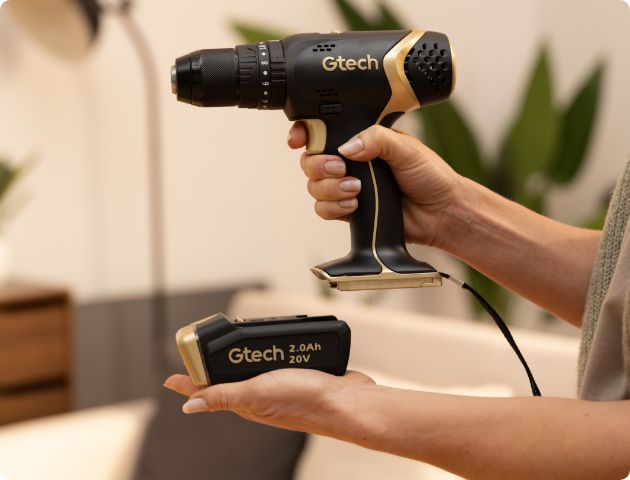
Gtech Cordless Combi Drill
What will you use your cordless drill for?
This is probably the most useful question to ask before looking at specifications.
Think about the jobs you actually expect to do.
. DIY job
. Tool to consider
. Assembling furniture
. Drill driver or combi drill
. Driving screws
. Drill driver or combi drill
. Drilling wood
. Drill driver or combi drill
. Drilling steel
. Suitable drill and bit
. Drilling suitable masonry
. Combi drill with hammer function
. Driving longer or tougher fixings
. Impact driver
You don't need a specialist tool for every job around the house. For many people, a versatile cordless drill can cover a surprisingly wide range of everyday tasks.
What voltage cordless drill do you need?
Voltage is one of the numbers you'll see most often when comparing cordless drills.
In simple terms, voltage tells you about the electrical potential of the battery system. But it's easy to fall into the trap of assuming that a higher voltage automatically means a better drill.
It doesn't.
The right voltage depends on the work you're planning to do, as well as how much size and weight you're comfortable handling.
For everyday DIY, look at the complete tool rather than choosing based on voltage alone. Battery capacity, torque, speed control and the drill's overall design all affect how useful it will be.
What about 12V, 18V and 20V drills?
Different manufacturers use different battery platforms and voltage ratings, so don't compare the numbers in isolation.
Instead, ask:
What jobs do I need the drill to handle?
If you're mostly assembling furniture and putting up shelves, your requirements will be different from someone regularly drilling into tougher materials.
How much torque do you need?
Torque is the twisting force produced by the drill.
It's particularly important when you're driving screws or working with materials that offer more resistance.
But again, more isn't always better.
For delicate work, too much force can make it harder to control the fixing. That's why adjustable torque settings are useful.
A good cordless drill should let you match the amount of force to the job rather than simply giving you maximum power all the time.
Why do torque settings matter?
Torque settings help control how much force the drill applies when screwdriving.
For example, you might want a gentler setting when driving a smaller screw into a softer material, and a higher setting for a larger fixing.
That control can make a noticeable difference when you're working on furniture, shelving or other jobs where you don't want to overtighten the screw.
For general DIY, control is just as important as power.
How many speeds does a cordless drill need?
Different jobs benefit from different speeds.
Lower speeds can give you greater control when starting a hole or driving a screw.
Higher speeds can be useful for drilling.
That's why a drill with more than one speed range can be useful for general DIY.
The important thing isn't simply finding the drill with the highest RPM. It's having enough control to match the speed to the job.
What chuck size should you choose?
The chuck is the part of the drill that holds the bit.
You'll commonly see chuck sizes expressed in millimetres. The number tells you the range of bit shanks the chuck can accept.
A keyless chuck makes changing bits straightforward because you can tighten and loosen it by hand rather than needing a separate chuck key.
When choosing a drill, check the chuck capacity against the bits and accessories you're likely to use.
For most DIYers, versatility is more useful than choosing a chuck simply because it has the biggest possible capacity.
What battery size should you choose?
Battery capacity is usually expressed in amp-hours (Ah).
In broad terms, a larger-capacity battery can provide more energy before it needs charging. But it can also add weight.
So once again, think about how you'll use the drill.
Occasional DIY
A smaller, lighter setup may be more convenient.
Longer jobs
A larger-capacity battery can be useful when you'll be working for longer periods.
Frequent DIY
A compatible battery system can be particularly useful because you may be able to use the same batteries across more than one tool.
That's one reason it's worth considering the battery ecosystem, rather than looking at the drill on its own.
Cordless drill vs combi drill
The terms are sometimes used interchangeably, but they aren't quite the same.
A standard drill driver is primarily designed for drilling and screwdriving.
A combi drill adds a hammer function, giving it another option for suitable masonry work.
If you want one cordless tool to cover a broad range of everyday DIY jobs, that extra versatility can be useful.
We've gone into the differences in more detail here:
What Is a Combi Drill? A Beginner's Guide to Choosing and Using One
Cordless drill vs impact driver
An impact driver and a cordless drill can both drive screws, but they're designed with different priorities. Learn more about Impact Drivers on our blog.
A cordless drill gives you control and versatility for drilling and screwdriving.
An impact driver is designed to deliver high rotational force and is particularly useful for tougher or repetitive fastening.
If you're building furniture, drilling holes and doing general jobs around the home, a combi drill may be the more versatile option.
If you're regularly driving long screws or working with tougher fixings, an impact driver may make more sense.
Read our full Combi Drill vs Impact Driver guide →
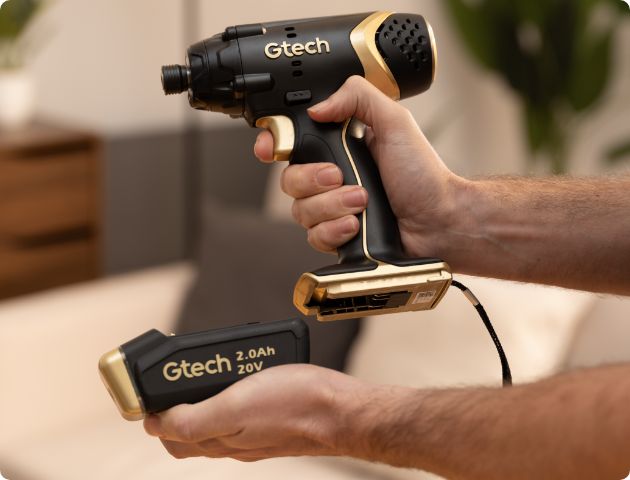
Gtech Cordless Impact Driver
What drill is best for common DIY jobs?
There's no single drill that's best for every job.
Here's a simpler way to think about it:
* Job
* What to look for
* Putting up shelves
* Drill with good control and screwdriving settings
* Assembling furniture
* Compact drill with adjustable torque
* Drilling wood
* Drill with suitable speed and chuck capacity
* Drilling steel
* Suitable drill, correct bit and speed control
* Drilling suitable masonry
* Combi drill with hammer function
* Driving larger fixings
* Impact driver
* General DIY
* Versatile combi drill
The best choice is the one that matches the work you actually do, rather than the one with the longest specification sheet.
What should you look for when buying a cordless drill?
If you're standing in a shop or comparing drills online, these are the specifications I'd pay attention to first:
1. Type of drill
Do you need a drill driver, combi drill or impact driver?
2. Battery system
Think about runtime, charging and whether you might want other tools that use the same battery.
3. Torque
Look for enough adjustable torque to suit the jobs you'll be doing.
4. Speed control
More than one speed range can make the drill more useful across different jobs.
5. Chuck
Check that it accepts the bits you'll actually use.
6. Weight
A drill can look great on paper but become tiring if you're holding it for a long time.
7. Handling
Look at the grip, controls and balance. These are difficult to appreciate from a specification sheet, but you'll notice them every time you use the tool.
8. What's included
Check whether the battery, charger and accessories you need are included.
Is a combi drill a good choice for general DIY?
For many people, yes.
If you want one cordless tool for everyday jobs such as drilling, screwdriving and suitable masonry work, a combi drill gives you several functions in one tool.
The Gtech Combi Drill is built around that idea.
It has a 20V lithium-ion battery, up to 40 minutes of stated runtime, a 1-hour charge time, 21 torque settings, two speed ranges and three modes for screwdriving, drilling and hammering.
It also has a 2–13mm keyless chuck, variable-speed trigger and LED light.
For the current full specifications:
Learn More on Combi Drill →
Frequently asked questions
What is a cordless drill used for?
A cordless drill can be used for jobs including drilling holes and driving screws. Depending on the type of drill, it can also be suitable for other tasks such as hammer drilling into suitable masonry.
Are cordless drills powerful enough for DIY?
For many everyday DIY jobs, yes. The important thing is choosing a drill suited to the materials and tasks you're working with rather than simply choosing the highest-powered option.
What voltage cordless drill should I buy?
Choose based on the work you need to do rather than voltage alone. Battery capacity, torque, speed, weight and the overall design of the tool all affect how suitable it is.
Can a cordless drill be used as a screwdriver?
Yes. Most drill drivers and combi drills have adjustable torque settings designed for screwdriving.
Can a cordless drill drill into brick?
A suitable combi drill with a hammer function can be used for suitable masonry drilling, provided the drill and bit are appropriate for the material and job.
What is the difference between a cordless drill and an impact driver?
A cordless drill is a versatile tool for drilling and controlled screwdriving. An impact driver is designed primarily for fastening and uses an impact mechanism to deliver high rotational force.
How much torque do I need in a cordless drill?
That depends on the work you're doing. Adjustable torque settings are useful because they allow you to use less force for delicate jobs and more for tougher fastening.
The right cordless drill is the one you'll actually use
Choosing a cordless drill doesn't have to mean comparing every number on the box.
Think about the jobs you normally do. Then look for a tool with the right combination of drilling capability, torque control, speed, battery life, weight and versatility.
For general DIY, a versatile combi drill can be a useful option when you want one cordless tool that can handle a range of jobs around the home.