Search "best hair dryer" and the results are dominated by one name before you have even scrolled past the ads. Brands search volume for its own hair dryer alone is more than double every other hair dryer search combined, and most "best hair dryer" roundups are built around comparing premium models against each other rather than helping you work out what you actually need. That is a genuinely unhelpful way to shop, because the best hair dryer for someone with fine hair who dries at home every morning is a different product entirely from the best hair dryer for someone with thick, curly hair who travels three times a month.
Two things determine the right hair dryer for you, and most buying guides only address one of them. The first is your hair, its thickness, texture, and how prone it is to frizz or damage. The second, just as important and far less discussed, is how you actually use a hair dryer day to day. Someone who diffuses curly hair twice a week has completely different needs from someone who blow dries straight hair in five minutes before work, and someone who travels regularly needs different things again. This guide works through both, so you can match a hair dryer to your actual hair and your actual routine, not to a generic ranking.
We will also cover the mistakes that damage hair regardless of which dryer you own, since technique matters as much as the tool itself. A well specified hair dryer used carelessly, too close to the hair, too hot for the hair type, with no heat protectant, will still cause damage over time, while a modest dryer used with good technique often outperforms an expensive one used badly
What Makes a Good Hair Dryer
Before getting into specific needs, it helps to know what separates a genuinely good hair dryer from an average one, since wattage numbers and marketing claims can make every model sound equally capable. Four things matter most: motor type, heat and speed control, weight, and ionic technology.
Motor type is the biggest factor in long term performance. Most budget hair dryers use a brushed motor, which is cheaper to produce but wears down with use, gets louder over time, and typically runs hotter to compensate for weaker airflow. A brushless motor, by contrast, maintains consistent airflow and speed over its lifespan without the same wear pattern, and generally runs quieter as a result, since it is not relying on physical brush contacts that create friction and noise. This is one of the more reliable indicators of build quality across the whole hair dryer market, budget and premium alike.
Heat and speed control matter more than a single high wattage number. A hair dryer with only one or two heat settings forces everyone who uses it into the same temperature regardless of hair type, which is a genuine problem in any household with more than one hair type. Look for at least three to four heat settings and multiple speed settings, so the dryer can be adjusted for fine hair on a cool setting or thick hair on high heat and high speed, from the same device.
Weight affects every single use, not just travel. A hair dryer is held at arm's length for anywhere from five to fifteen minutes depending on hair length, and a dryer that feels fine picked up in a shop can feel genuinely tiring by the end of a full drying session. This matters even for people who never travel with their dryer, since the weight is a daily consideration, not an occasional one.
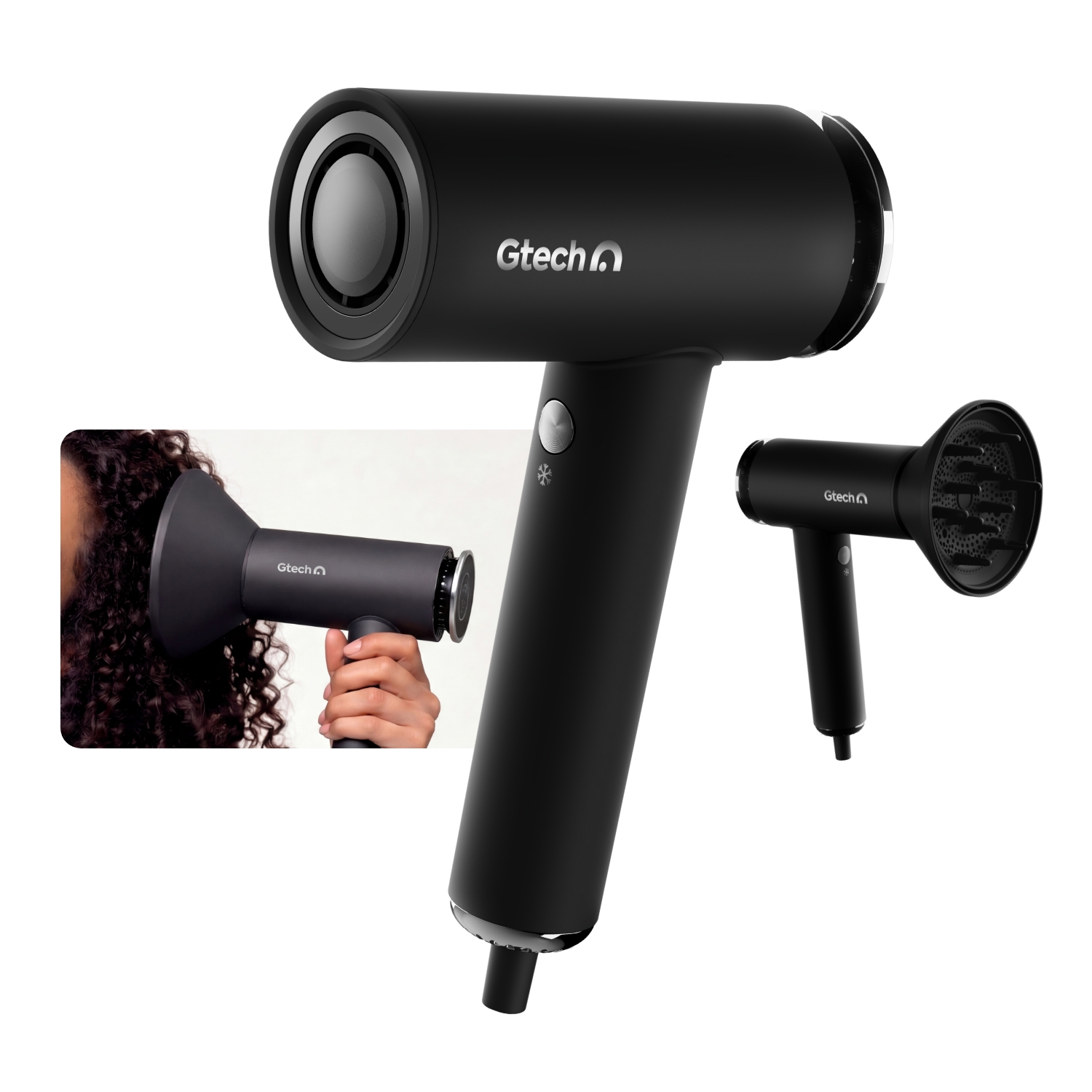
Ionic technology is the fourth factor, and it works the same way across hair dryers as it does in straighteners. Ionic dryers emit negatively charged ions into the airflow, which break down water molecules at the hair shaft rather than relying on heat alone to evaporate moisture from the surface. The practical result is faster drying at lower heat, less static, and a smoother, less frizzy finish. Gtech's DryOnic combines all four of these factors as a useful reference point, a 110,000RPM brushless motor, four heat and four speed settings, a 0.6kg body, and ionic technology throughout.
Attachments are worth a brief mention here too, since they get treated as an afterthought when they genuinely change what a hair dryer can do. A concentrator nozzle narrows and directs airflow for sleek, precise styling or root lift, while a diffuser spreads airflow for curly or wavy hair, covered in more depth in the next section. A dryer that includes both, and lets you switch between them without tools, gives you two genuinely different styling capabilities from one device rather than locking you into a single result regardless of the day's styling goal.
Do You Need a Hair Dryer with a Diffuser?
This is one of the most commonly searched hair dryer questions, and the honest answer depends entirely on your hair texture, not on whether a diffuser is generally "better."
A diffuser attachment spreads airflow over a wider area instead of concentrating it into a single directed stream. For curly, wavy, or textured hair, this matters enormously, since concentrated airflow disrupts natural curl formation and pushes hair around as it dries, which typically increases frizz and breaks up the curl pattern before it has properly set. A diffuser lets curly and wavy hair dry largely undisturbed, cupping sections gently as warm air circulates around them, which preserves and often enhances the natural pattern rather than fighting it.
For straight or fine hair, a diffuser is far less useful and in most cases actively works against you. Straight hair styling generally benefits from directed airflow, either for a sleek, smooth finish using a concentrator nozzle, or for root lift and volume by drying upside down or at the roots with focused heat. A diffuser spreads that airflow too widely to create either effect efficiently, meaning straight hair typically takes longer to dry with a diffuser attached than without one.
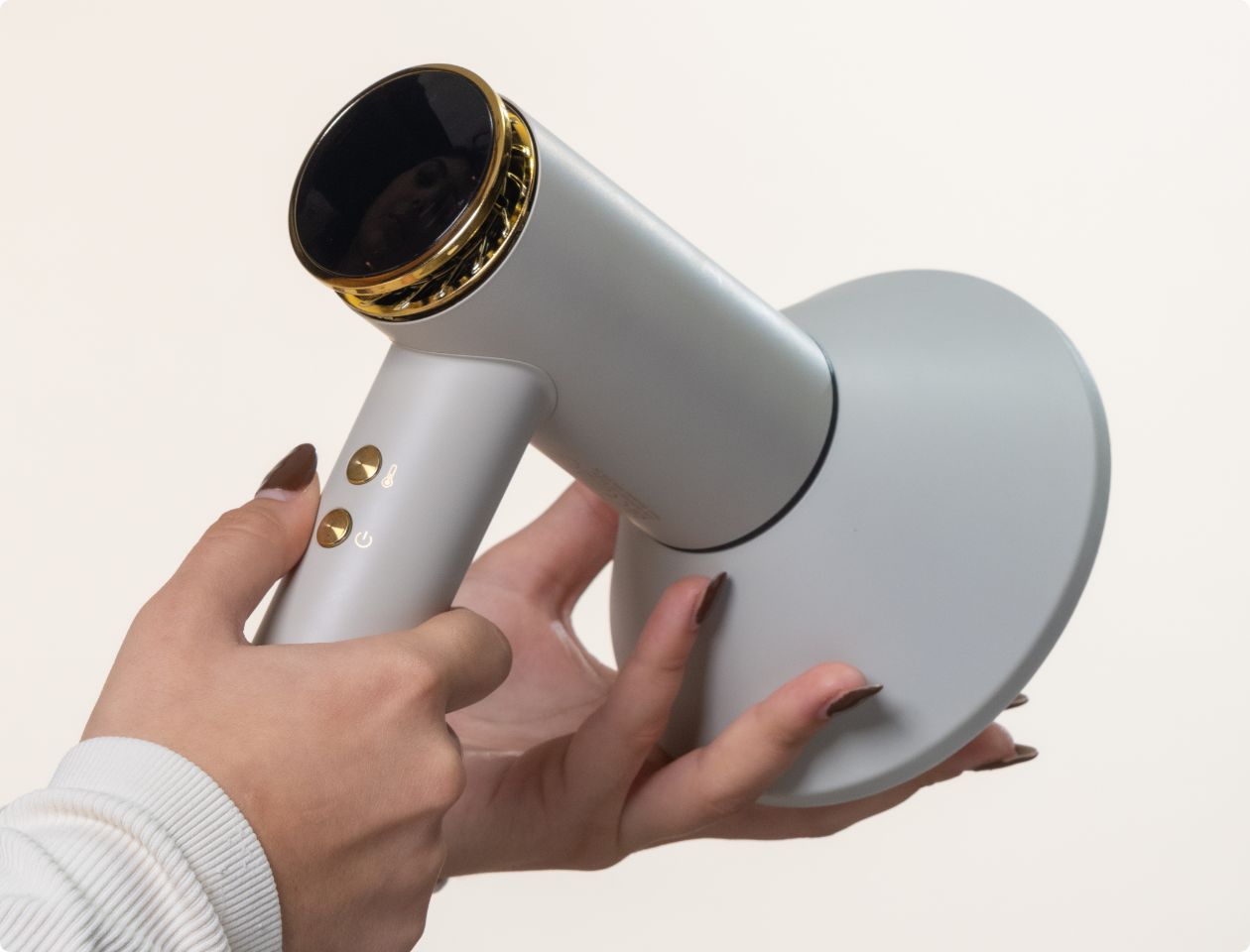
If your hair type sits somewhere in between, loose waves or hair that is straight but prone to frizz, the honest answer is that a concentrator nozzle will usually serve you better day to day, with a diffuser kept for occasional use if you ever want to enhance texture rather than smooth it away. This is why a hair dryer that includes both attachments, rather than just one or the other, genuinely matters rather than being a marketing checkbox. The DryOnic includes both a magnetic diffuser and a concentrator nozzle, which switch in seconds, so the choice can be made per session based on the style you actually want rather than being locked into whichever single attachment came in the box.
One detail worth knowing if you are shopping specifically for the diffuser: diffuser quality varies more than people expect. A shallow diffuser with short prongs will work adequately for loose waves but struggles with tighter curl patterns, since the curls are not held in place well enough as air circulates. A deeper diffuser bowl with longer, more widely spaced prongs generally handles a broader range of curl types, from loose waves through to tight coils, without hair slipping out during drying. It is also worth checking how securely the diffuser attaches, since a loosely fitting attachment can wobble or detach mid session, which is more than just an inconvenience when it happens with a hot dryer in hand. A magnetic attachment system, rather than a twist-lock fitting that can loosen over repeated use, tends to stay seated more reliably through a full drying session.
Best Hair Dryer for Travel
Travel is where portability, weight, and heat up considerations, hair type aside, become genuinely decisive, and where a lot of people end up buying a second, smaller hair dryer purely for trips rather than finding one dryer that works for both.
Weight is the obvious factor, but it is not the only one. A genuinely good travel hair dryer needs to reach a usable airflow and heat level quickly, since a compact dryer that takes far longer to dry your hair than your usual one is not actually saving you time, even if it saved space in your bag. A brushless motor helps here too, since it maintains strong airflow in a smaller, lighter housing more effectively than a brushed motor can, which is why lightweight brushed dryers often feel noticeably weaker than their full sized counterparts while lightweight brushless dryers generally do not.
Voltage compatibility is worth checking carefully if you travel outside the UK regularly, since not all hair dryers are dual voltage, and using a single voltage UK dryer on the wrong supply abroad can damage the motor or simply fail to work. This is a detail that varies by model and is worth confirming directly against the specific product you are considering rather than assuming, since it is not something manufacturers always make prominent in general marketing copy.
Beyond voltage, the same features that make a hair dryer good for everyday use make it good for travel: a brushless motor for consistent performance in a lighter housing, decent heat and speed control so you are not stuck with only one setting away from home, and ideally a fold-away handle or compact overall footprint that packs down easily. The DryOnic weighs 0.6kg and has a compact profile that fits into a wash bag or carry-on without the bulk of a standard full sized dryer, and its brushless motor means that weight saving does not come at the cost of drying performance.
Do You Need a Quiet Hair Dryer?
Noise is a genuine, if less discussed, factor for a meaningful number of people, particularly anyone drying their hair early in the morning in a household where others are still asleep, or anyone with noise sensitivity. Motor type is the main driver of noise level, in the same way it drives performance and longevity. Brushed motors tend to get louder as they wear, since the physical brush contacts that power them create friction noise that increases with use. Brushless motors run more quietly from new and tend to stay that way over the dryer's lifespan, since there are no wearing contact parts generating additional noise as the motor ages.
This is not a reason to choose a specific dryer on noise alone, since drying performance and hair type suitability should come first, but it is a genuine secondary benefit of prioritising a brushless motor for the reasons already covered above. If noise is a specific concern for your household, it is worth checking a dryer's motor type directly rather than relying on a stated decibel figure alone, since manufacturers measure and report noise levels inconsistently, and motor type is a more reliable general indicator.
Best Hair Dryer for Frizzy Hair
Frizz is caused by the outer cuticle layer of the hair lifting and roughening, typically from humidity, friction, or heat damage, and a hair dryer that only applies heat does very little to address that cuticle directly. This is exactly why ionic technology matters so much more for frizzy hair than for any other single hair concern.
Ionic dryers release negative ions that interact with the positively charged water molecules in wet hair, breaking them down faster than heat alone would and helping the cuticle close and lie flat rather than staying lifted. A non-ionic dryer evaporates moisture mainly from the hair's surface, which takes longer and leaves the cuticle rougher, both of which increase frizz. If frizz is your primary concern, ionic technology is the single feature worth prioritising above all others, more than wattage, more than attachments, more than brand.
Heat control matters here too, specifically the ability to finish on a lower or cool setting. Overheating already-frizzy hair, even briefly at the end of a session, can undo much of the smoothing an ionic dryer has achieved, since excess heat re-lifts the cuticle it just closed. A cool shot function, run for the final few seconds of drying, locks in the smoother finish rather than letting residual heat undo it.
Technique plays a role that is easy to overlook. Rough towel drying before using a hair dryer roughens the cuticle mechanically, working against whatever the dryer's ionic technology is trying to do. Gently squeezing out excess water with a microfibre towel or an old cotton t-shirt, rather than rubbing vigorously with a regular towel, gives an ionic hair dryer a genuinely smoother starting point to work from
Best Hair Dryer for Fine Hair
Fine hair needs the opposite consideration from thick or coarse hair, minimal heat exposure and gentle, controlled airflow rather than raw power, since fine hair has a smaller diameter and dries faster while being more vulnerable to heat damage in the process.
The most important feature for fine hair is a genuine low heat setting, not just a dryer that technically has "multiple settings" while the lowest one still runs hot. Fine hair styled repeatedly at high heat shows damage more visibly and more quickly than thicker hair types, since there is less hair mass to absorb and disperse the heat. Look specifically for a cool or cold shot function alongside a properly low heat setting, since fine hair often needs to finish on minimal heat to avoid overdrying.
Weight matters more for fine hair styling than people expect, mainly because fine hair styling often involves more precise, sustained movements, root lifting with a brush, careful directional drying for volume, rather than a quick all-over dry. A heavier dryer becomes noticeably more tiring during this kind of detailed styling than during a simple quick dry.
Ionic technology remains genuinely useful for fine hair, not primarily for frizz control in this case but because it allows visibly dry results at lower heat than a non-ionic dryer would need. This means you can often use a gentler setting on an ionic dryer and still finish drying in a comparable time to a higher heat setting on a non-ionic one, which is a meaningful advantage when minimising heat exposure is the priority.
A concentrator nozzle, rather than a diffuser, is generally the better attachment for fine hair aiming for volume or a smooth finish, since directed airflow at the roots creates lift more effectively than a diffuser's spread airflow does for this hair type.
Best Affordable Hair Dryer: What's Worth Paying For
It is a reasonable question whether a mid-range or premium hair dryer actually performs better than a budget one, or whether the difference is mostly branding and packaging. The honest answer is that quality genuinely improves with price up to a point, and then the gains flatten out noticeably.
Dryers under roughly £20 to £25 are where the compromises are most visible. These typically use brushed motors that grow louder and less powerful over time, offer only one or two heat and speed settings, and rarely include ionic technology or interchangeable attachments. They will dry hair, but with less control and less protection against heat damage than a mid-range option, and the motor's lifespan is usually noticeably shorter.
In the roughly £50 to £100 range, you generally get a brushless motor, genuine ionic technology, multiple heat and speed settings, and interchangeable attachments including a proper diffuser and concentrator nozzle. This is where the real jump in day to day usability happens, since the combination of a brushless motor and ionic technology meaningfully changes both drying time and hair condition over regular use. The Gtech DryOnic hair dryer, at £179.99, sits above this entry point specifically because it adds the smart memory function and premium build quality on top of the core specification.
Above roughly £250, which is where several premium branded dryers sit, the returns become far less proportional to the price increase. You are often paying for design, brand prestige, and marginal refinements to airflow or noise level rather than a fundamentally different drying experience. Unless quiet operation or a specific design aesthetic genuinely matters to you, the mid-range bracket covers the vast majority of what actually affects daily results.
If budget is the deciding factor, prioritise motor type and ionic technology over secondary features like colour options or a higher stated wattage number, since wattage alone is a poor predictor of actual drying performance compared to motor quality and airflow design. A 2,000 watt dryer with a weak brushed motor will often perform worse in practice than a 1,600 watt dryer with a strong brushless motor, since wattage measures power draw, not how efficiently that power is converted into usable, consistent airflow.
Common Hair Drying Mistakes That Damage Hair
Even a well specified hair dryer causes damage if it is used badly, and most of what people attribute to "using a hair dryer too often" comes down to a handful of specific, fixable habits.
Drying from too close is the most common mistake. Holding the dryer directly against the hair, rather than six to eight inches away, concentrates heat on a small area and significantly raises the risk of localised damage, even at a moderate temperature setting. Keeping a consistent distance and moving the dryer continuously rather than holding it still on one section makes a meaningful difference over time.
Skipping heat protectant before drying is a preparation mistake rather than a technique one, but it has an outsized effect. A heat protectant spray creates a barrier that reduces direct heat transfer to the hair shaft, and this thirty second step meaningfully reduces cumulative damage across months of regular drying, in exactly the same way it does before straightening.
Rough towel drying before using a hair dryer damages hair mechanically before heat even enters the picture, roughening the cuticle through friction. Squeezing out excess moisture gently with a microfibre towel, rather than rubbing with a standard towel, gives whatever hair dryer you use a considerably better starting point.
Skipping the cool shot at the end of a session is a small habit with a real effect. Finishing on a cool or cold setting for the last few seconds closes the cuticle that heat has just opened, locking in smoothness and shine rather than leaving hair to cool naturally with the cuticle still slightly raised.
Using too high a heat setting out of habit, rather than matching heat to hair type, causes more cumulative damage than almost any other single factor. Fine hair styled at the same heat as thick hair, simply because that is the setting the dryer defaults to, will show damage far sooner than hair dried at an appropriate, lower temperature.
Using the wrong brush alongside a hair dryer compounds heat damage rather than causing it directly. A metal barrel brush heats up under warm airflow and effectively adds a second heat source against the hair, which is particularly risky for fine or already-damaged hair. A ceramic or wooden barrel brush, or simply a paddle brush for straight styling, does not carry the same additional heat risk.
If heat damage is already a concern for you, our separate guide on the signs of heat damaged hair covers how to recognise early damage and adjust your routine while your hair recovers.
Choosing the right hair dryer for your specific hair type, and for how you actually use it day to day, makes a genuine difference to both your styling results and your hair's condition over time. A dryer matched to your hair and your routine, used with reasonable technique, will consistently outperform an expensive model used carelessly or a budget dryer that was never built to protect hair in the first place. If you have curly or wavy hair, prioritise the diffuser and ionic technology above everything else discussed here. If you travel often, weight and heat up speed matter more than any other single factor. If your hair is fine or already showing signs of damage, a genuine low heat setting and a cool shot function should sit at the top of your list, above wattage, above brand, above anything else.
If you already use, or are considering, an ionic hair straightener alongside your hair dryer, it is worth using matched ionic technology across both tools rather than mixing brands with different heat control and ionic output. Gtech's DryOnic and StyleOnic bundle pairs an ionic hair dryer with an ionic hair straightener in one colourway, at a lower combined cost than buying each separately.
Frequently Asked Questions
Q1: Do I need a diffuser or a concentrator nozzle for my hair dryer?
It depends on your hair type. A diffuser suits curly, wavy, or textured hair, since it spreads airflow to dry hair with minimal disruption to the natural pattern. A concentrator nozzle suits straight or fine hair, since directed airflow creates a smoother finish or more root lift than a diffuser can. Many hair dryers, including the DryOnic, include both, so the choice can be made per session.
Q2: Is a more expensive hair dryer always better?
No. Quality improves meaningfully up to roughly the £50 to £100 range, where a brushless motor, genuine ionic technology, and proper attachments become standard. Above around £250, much of the added cost goes toward design, brand prestige, or marginal refinements rather than a fundamentally different drying result for most people.
Q3: Why does my hair dryer feel weaker than it used to?
This is usually a sign of a brushed motor wearing down, since the physical brush contacts that power these motors degrade with use, reducing airflow and increasing noise over time. A brushless motor, which has no equivalent wearing contact parts, maintains consistent performance for considerably longer.
Q4: Does a hair dryer with a diffuser take longer to dry hair?
For curly or wavy hair, no, since the diffuser is working with the hair's natural pattern rather than against it. For straight hair, yes, a diffuser typically takes longer than a concentrator nozzle, since it spreads airflow too widely to create the directed, fast-drying effect straight hair styling benefits from.
Explore the full range of Gtech hair care, including ionic hair dryers, ionic hair straighteners, and bundles.